If you’ve ever opened a bag of conventional layer pellets and thought “this smells like compressed dust,” you already understand why Scratch and Peck Feeds has built a following. Scratch and Peck makes feeds from whole and cracked grains — wheat, oats, peas, and corn — that look and smell closer to something you’d find in a grain bin than in a pet-food factory. They sell two main formats: a mash (loose, whole-grain mix you can serve dry or soak in water to ferment) and a pellet (the familiar compressed cylinder most backyard flock owners already know). Fermentation here means soaking the mash in water for 24–72 hours so that naturally occurring beneficial bacteria partially break down the grain — a centuries-old practice that can improve nutrient absorption and cut feed waste. This article lays out what owners report experiencing with each format, where the real trade-offs sit, and how to decide which one belongs in your coop.
What Makes Scratch and Peck Different Before You Even Choose a Format
The format question — mash or pellet — is secondary to what both products share: a whole-grain, non-GMO, USDA Certified Organic formulation with visible ingredient integrity. When reviewers describe opening a bag and being struck by a smell “like real food,” that reflects a genuine difference in how these feeds are processed compared to commodity pellets that are ground, steam-conditioned, and die-extruded at high heat.
Penn State Extension, in their guidance document “Feeding Chickens for Egg Production” published by the Penn State College of Agricultural Sciences, notes that heat processing — inherent in pelleting — can degrade heat-sensitive vitamins and some amino acids depending on die temperature and dwell time. Scratch and Peck’s mash line largely sidesteps this issue. The pellets undergo some processing, but the company’s published guaranteed analysis shows the protein integrity holds: the Layer Pellet is spec’d at 16% crude protein, consistent with their Layer Mash, with lysine and methionine levels disclosed — a level of label transparency that remains uncommon in the backyard feed segment.
ATTRA/NCAT’s publication “Organic Poultry Production in the United States,” produced by the National Sustainable Agriculture Information Service, identifies ingredient transparency and documented amino acid profiles as key differentiators for certified organic layer feeds — and Scratch and Peck’s willingness to publish those numbers is worth noting before you ever crack open the bag.
Head-to-Head: Three Buyer Profiles Compared
The mash and the pellet serve genuinely different flock-management situations. Rather than declaring one format universally superior, the most useful framework is matching format to management style. The three sections below structure that comparison and address the real performance questions buyers bring to this decision.
The Fermentation-First Homesteader (Mash as Primary Format)
The Scratch and Peck Layer Mash is the format that generates the most enthusiastic long-term reviews — and the most upfront homework. Owners describe fermentation as straightforward once a routine is established: combine dry mash with dechlorinated or filtered water at roughly a 1:1.5 ratio by volume, cover loosely to allow gas to escape, and let sit at room temperature for 24–72 hours until the mix smells pleasantly sour rather than off.
The USDA National Agricultural Library’s literature compilation “Fermented Feed and Poultry Production: A Review of Literature” documents improved nutrient digestibility and reduced pathogen load as consistent findings across peer-reviewed studies — outcomes that appear to translate into real-world reports from Scratch and Peck mash users. Egg-production reports from Layer Mash users are notably specific: multiple owners describe laying rates that improved materially after switching from conventional options, and at least one repeating pattern across aggregated retailer reviews documents switching away from the mash, watching egg frequency and yolk color decline, then switching back and recovering production.
The thin-shell issue that some mash buyers encounter is real and fixable. Fermented mash’s improved palatability means hens eat more eagerly and sometimes faster than their calcium metabolism can keep up with. If the mash’s calcium level — typically 3.5–4% in Scratch and Peck’s Layer Mash per their published guaranteed analysis — isn’t keeping pace with high-consumption-rate eating, hens can temporarily under-consume calcium relative to laying demands. The fix is offering Scratch and Peck Limestone free-choice in a separate dish alongside the mash. Penn State Extension’s layer feeding guidance confirms that hens self-regulate calcium intake reliably when given a free-choice source — making the Limestone a practical companion product rather than an admission of formulation failure.
The honest workload trade-off: fermentation requires a two- to three-day lead time, dedicated food-grade fermentation vessels, and daily attention during warm months to prevent spoilage. For flock owners with a routine established, this is no more demanding than maintaining a sourdough starter. For someone managing 50+ birds alongside a demanding schedule, it’s a real variable cost in time.
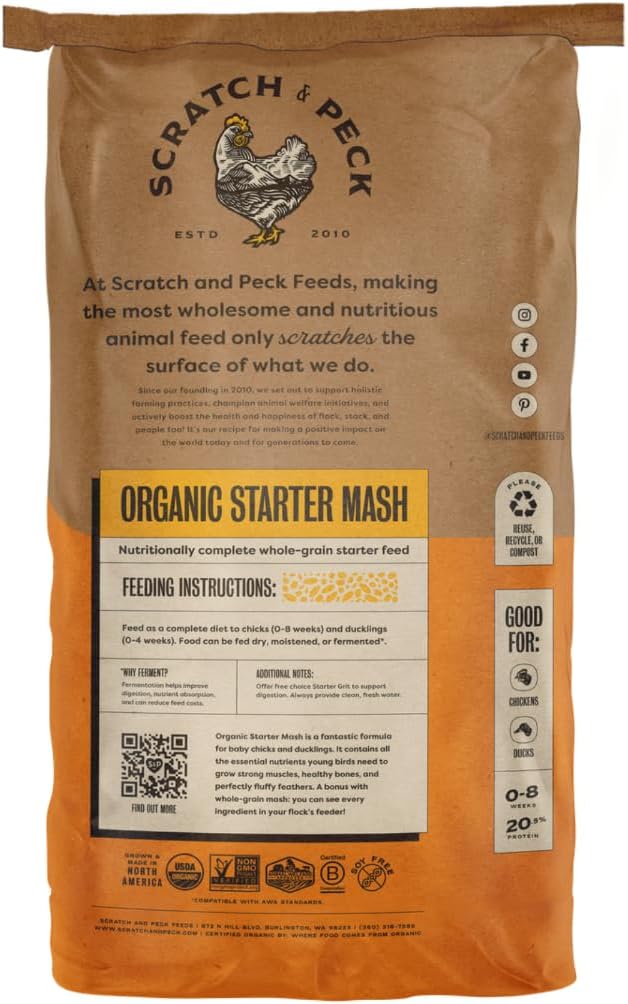
Scratch
$71.99
In stock on Amazon
Check price on AmazonThe Free-Range Keeper Running Treadle Feeders (Pellet as Primary Format)
The Layer Pellet occupies a different value position. Owners who switched to pellets from the mash most often cite waste reduction as the primary driver — not dissatisfaction with the mash’s performance, but a practical reckoning with how much loose grain gets scratched out of feeders, rained on, or ignored.
The Poultry Site’s technical review “Feed Form Effects on Broiler and Layer Performance” notes that pellets consistently outperform mash on feed conversion in environments where birds have access to supplemental forage — exactly the free-range and pastured contexts where most Scratch and Peck buyers operate. In those settings, hens make choices. If the pellet holds together and delivers a dense nutritional payload per peck, a free-range bird eating supplemental insects and plants can meet her amino acid requirements on less total pellet volume than she’d need of dry mash.
On waste specifically: a recurring complaint about premium whole-grain feeds at competing brands is fine-particle waste accumulating under feeders and going unconsumed. Scratch and Peck’s pellet format addresses this directly — reviewers note the pellets hold shape well through normal feeder handling, with minimal fines accumulating beneath treadle feeders or hanging tube feeders. This contrasts with reports of powdery waste at premium price points from competing organic brands, where fine-ground particles fall through feeder grates unconsumed and effectively inflate real cost-per-pound.
Owners of free-range Layer Pellet users describe flocks thriving on the pellet as a base ration even when birds are ranging widely — the pellet’s density compensates for variable forage intake day-to-day without requiring daily fermentation prep.
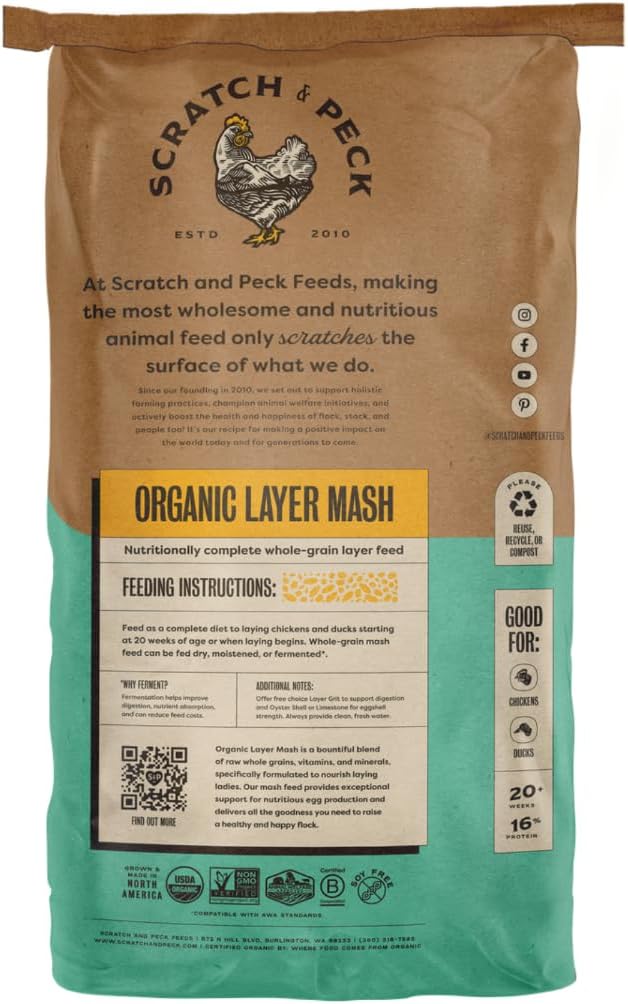
Scratch
$64.99
In stock on Amazon
Check price on AmazonThe Transitioning Buyer Weighing Price Against Performance
This is the profile that hesitates longest at the feed store shelf: Scratch and Peck at roughly $40–$48 per 40 lb bag versus a conventional layer pellet at $18–$24. The comparison below uses approximate 2026 mid-year market conditions.
| Format | Approx. price / 40 lb | Crude protein | Lysine disclosed? |
|---|---|---|---|
| Scratch and Peck Layer Mash (Organic) | ~$40–$48 | 16% | Yes |
| Scratch and Peck Layer Pellet (Organic) | ~$40–$48 | 16% | Yes |
| Kalmbach 17% Layer Pellet (conventional) | ~$20–$24 | 17% | No |
| Purina Layena Pellets (conventional) | ~$18–$22 | 16% | No |
The bag-price gap looks decisive until you factor in the fermentation stretch. A flock of 6–8 laying hens in peak production typically consumes a 40 lb bag in approximately 3–4 weeks under conventional dry-feeding. With fermented mash, owners consistently report stretching the same dry-weight bag to 4–5 weeks — an effective reduction in cost-per-day of 15–25%. Mother Earth News, in their homesteading features archive under “Fermenting Chicken Feed for Better Flock Health,” corroborates this stretch factor: fermentation improves digestibility enough that birds consume less total dry matter per day to meet nutritional needs.
At those ratios, the premium price gap between Scratch and Peck and a conventional layer pellet narrows materially. For homesteaders selling eggs at farmers markets or tracking egg cost against grocery prices, even a modest improvement in laying consistency across 8–12 hens over a production year makes the math tighter than the bag sticker suggests.
ATTRA/NCAT’s “Organic Poultry Production in the United States” also notes that certified organic inputs carry documented traceability premiums that directly support direct-sale egg positioning — a value that appears on the farm’s income side rather than solely on the feed-cost side.
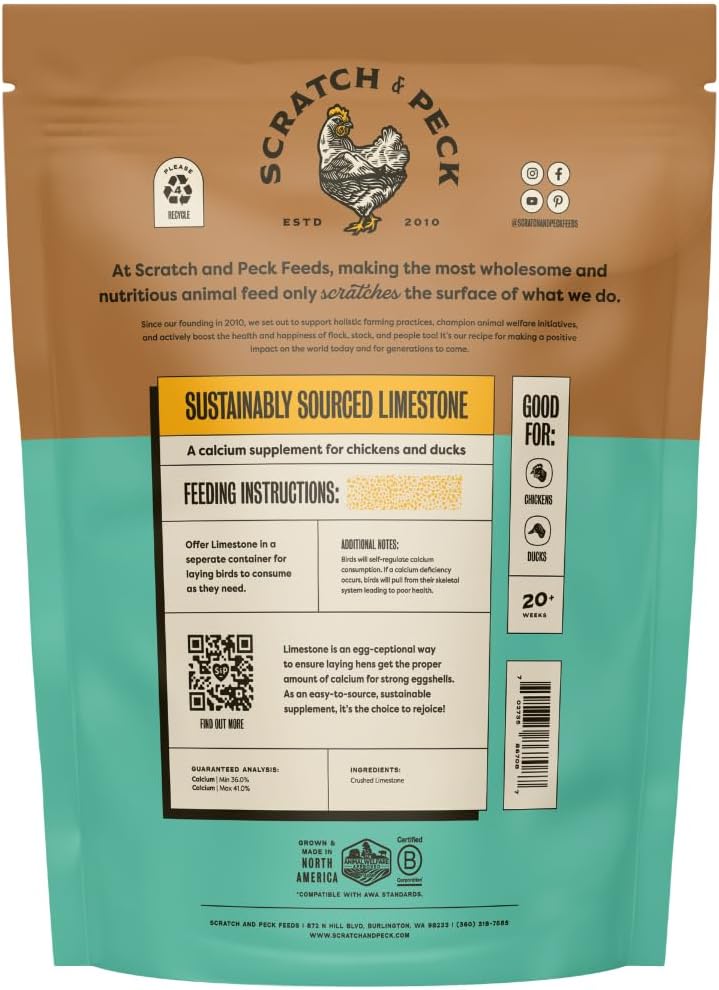
Scratch
$23.99
In stock on Amazon
Check price on AmazonFrequently Asked Questions
Can I use Scratch and Peck mash for ducks as well as chickens? Yes, with an adjustment. Ducks require higher niacin (vitamin B3) than chickens, and standard layer formulas — including Scratch and Peck’s Layer Mash — are optimized for chicken requirements. If you’re feeding ducks alongside chickens, adding a niacin supplement (brewer’s yeast is the most common approach, roughly 1 tablespoon per cup of feed) closes the gap. Penn State Extension’s poultry nutrition guidance, “Feeding Chickens for Egg Production,” flags niacin deficiency as the most common nutritional gap when ducks are fed chicken-formula feeds long-term.
How do I ferment the mash, and does it actually improve palatability? Combine dry mash with dechlorinated or filtered water at roughly a 1:1.5 ratio by volume — you want the grain submerged but not swimming. Cover loosely so gas can escape and let sit at room temperature for 24–72 hours. A pleasant, slightly sour smell means it’s ready; an off or putrid smell means discard and start over. Owners consistently describe fermented mash as far more eagerly consumed than dry mash — hens that were indifferent to the dry product clean fermented portions quickly.
Why are my hens getting thin shells on organic feed, and do I need to add limestone separately? Thin shells on organic layer feed are almost always a calcium delivery issue, not a formulation failure. Offer Scratch and Peck Limestone free-choice in a separate dish; hens self-regulate their calcium intake and will consume what they need. Expect shell quality to normalize within 1–2 laying cycles.
Is the price difference over conventional layer pellets actually justified by egg output? For most flock owners who make the switch and maintain it, the aggregated review pattern says yes — but the benefit compounds through multiple factors: fermentation stretch reduces actual cost-per-pound consumed, egg quality and consistency improve, and certified organic status matters for direct-sale positioning. The break-even is harder to achieve for a flock of four hens than for a flock of twelve.
How long does a 40 lb bag last for a flock of 6–12 hens? Dry: roughly 2.5–4 weeks depending on flock size and forage access. Fermented: 3.5–5 weeks for the same flock, because birds consume less dry matter per day. Free-range supplementation extends both estimates.
Can I transition between the Starter, Grower, and Layer mash without a rejection period? Owners report transitions within the Scratch and Peck line as notably smooth compared to switching between different brands — the consistent whole-grain format and similar aroma across life-stage products reduce hesitation. A 5–7 day blend transition is still advisable as best practice, per ATTRA/NCAT’s “Organic Poultry Production in the United States,” but most owners report no significant rejection even with abrupt switches within the same product line.
The Decision Rule
If you have time for a fermentation routine and your priority is maximum egg performance and ingredient transparency, managing 6–20 hens: run the Scratch and Peck Layer Mash — add Limestone free-choice from day one and don’t wait for thin shells to prompt you.
If you’re managing a larger free-range flock, running treadle feeders, or need a set-and-monitor system without daily fermentation prep: the Layer Pellet delivers the same organic formulation, holds up through feeder hardware better than competing premium whole-grain options, and produces strong results as a base ration with supplemental forage.
If you’re evaluating whether Scratch and Peck justifies its premium over Kalmbach or Purina at all: run the fermentation stretch math against your flock size and local egg value first. For most backyard keepers at 8–16 hens, the cost-per-day gap is narrower than the bag price makes it look — and egg quality consistently tips the scale.