If you’ve ever stood in the feed-store aisle staring at a bag of dried mealworms, a pouch of black soldier fly larvae (BSFL — the small, flat, tan grubs that look like sunflower seeds), and a colorful sack of scratch grains (a mix of cracked corn, wheat, and other whole grains), you already know the choice is harder than it looks. All three are sold as “treats” for backyard chickens, but they do very different things nutritionally. Mealworms and BSFL are high-protein insect foods. Scratch grains are essentially a carbohydrate snack. Choosing the wrong one — or feeding too much of any of them — can quietly undermine the complete layer feed your hens depend on for egg production and long-term health. This guide breaks down what’s actually in each category, when to use each, and how to stay within safe treat thresholds so these additions stay genuinely supplemental.
| EDITOR'S PICKHatortempt Bulk Dried Mealworms… | Mid-tierManna Pro 7-Grain Ultimate Chic… | Budget pickManna Pro Harvest Delight Poult… | |
|---|---|---|---|
| Weight | 5 lb | 10 lb | 2.25 lb |
| Form | Dried | Grain | Whole grain & seed |
| Primary use | Chicken feed | Scratch treat | Poultry treat |
| Protein source | Mealworms | 7-grain | 14% protein |
| Grain mix | ✗ | ✓ | ✓ |
| Fruit & veg | — | — | ✓ |
| Price | $39.99 | $15.49 | $11.49 |
| See on Amazon → | See on Amazon → | See on Amazon → |
The Nutritional Scorecard: What You’re Actually Buying
Before comparing products within each category, you need a baseline on what these three treat types actually deliver — because “high protein” means something very different at 18% versus 53%.
Dried mealworms (Tenebrio molitor larvae) run approximately 50–53% crude protein and 25–28% fat on a dry-matter basis, per published supplier ingredient specifications. That fat content is the double-edged sword: it makes mealworms palatable and energy-dense, but overconsumption tips quickly into caloric imbalance. Calcium is the other concern. Mealworms are notably low in calcium — typically around 0.05–0.1% — and relatively high in phosphorus, producing an unfavorable calcium-to-phosphorus ratio. For laying hens, which require robust daily calcium intake to build eggshells, this imbalance matters over time. The Merck Veterinary Manual’s poultry nutrition section identifies calcium as one of the most critical minerals in laying hen rations, and treats that consistently widen the calcium gap deserve attention.
Black soldier fly larvae (BSFL), sold dried under brands including Classic Flock, Joyprotyn, I LOVE WORMS, and Eaton, present a meaningfully different nutrient profile. FAO documentation on insects as feed ingredients — specifically the FAO’s published work on black soldier fly larvae for poultry — places crude protein in the 37–45% range, slightly below mealworms, but calcium at 0.9–1.5%, dramatically higher. That calcium accumulates in the larvae’s exoskeleton and increases when larvae are raised on calcium-rich substrates. The gap — roughly 10–15 times more calcium than mealworms — is the primary reason experienced keepers specifically reach for BSFL during molt, when hens are rebuilding feathers while also needing to maintain bone calcium reserves.
Scratch grains belong in a different category entirely. A typical scratch blend runs 8–10% crude protein and 60–70% carbohydrates, with minimal calcium or micronutrient contribution. Penn State Extension’s guide on feeding backyard flocks describes scratch as a treat food comparable to candy — enjoyable, behaviorally useful, but nutritionally dilutive if it displaces complete feed. ATTRA’s Poultry: Organic and Pastured Production publication makes the same point: grain treats support behavioral enrichment and cold-weather calorie supplementation, but they should not anchor a feeding strategy.
Treat category comparison (dry-matter basis, published specifications):
| Treat Type | Crude Protein | Crude Fat | Calcium | Tier |
|---|---|---|---|---|
| Dried Mealworms | ~50–53% | ~25–28% | ~0.05–0.1% | Manna — $15.49 |
| Dried BSFL | ~37–45% | ~18–25% | ~0.9–1.5% | Hatortempt — $39.99 |
| Scratch Grains | ~8–10% | ~3–5% | ~0.05–0.15% | Manna — $11.49 |
Comparing the Three Categories Head to Head
Scratch Grains: The Budget Behavioral Tool
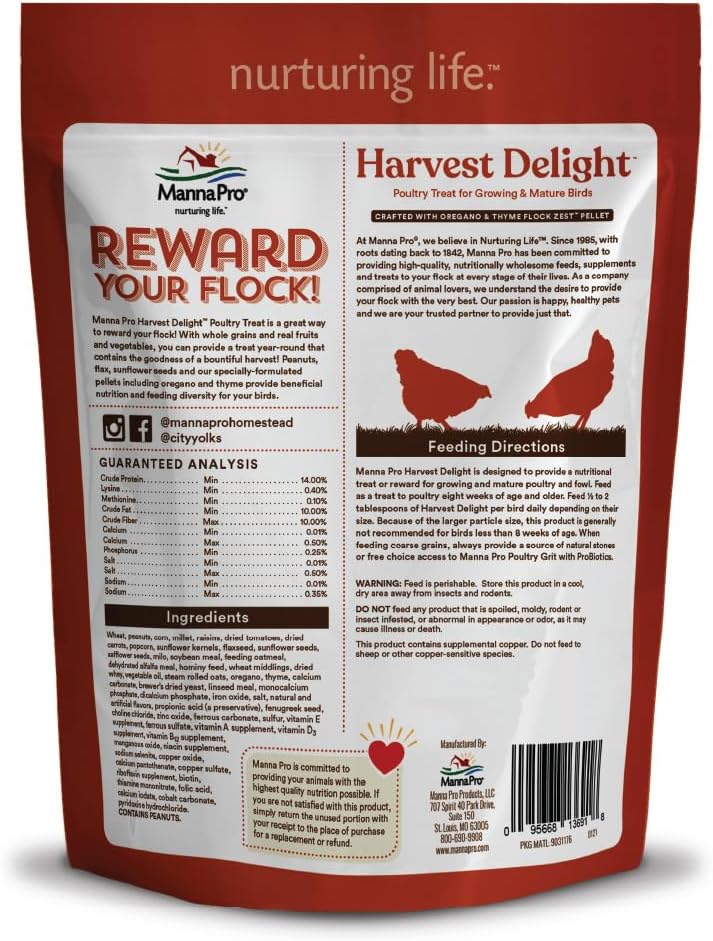
Scratch grains are the lowest-cost treat category per pound and the most widely available. Their nutritional contribution to a flock eating complete layer feed is minimal — the carbohydrates and modest protein they provide are already covered in better ratios by a quality pellet. What scratch genuinely offers is behavioral and situational.
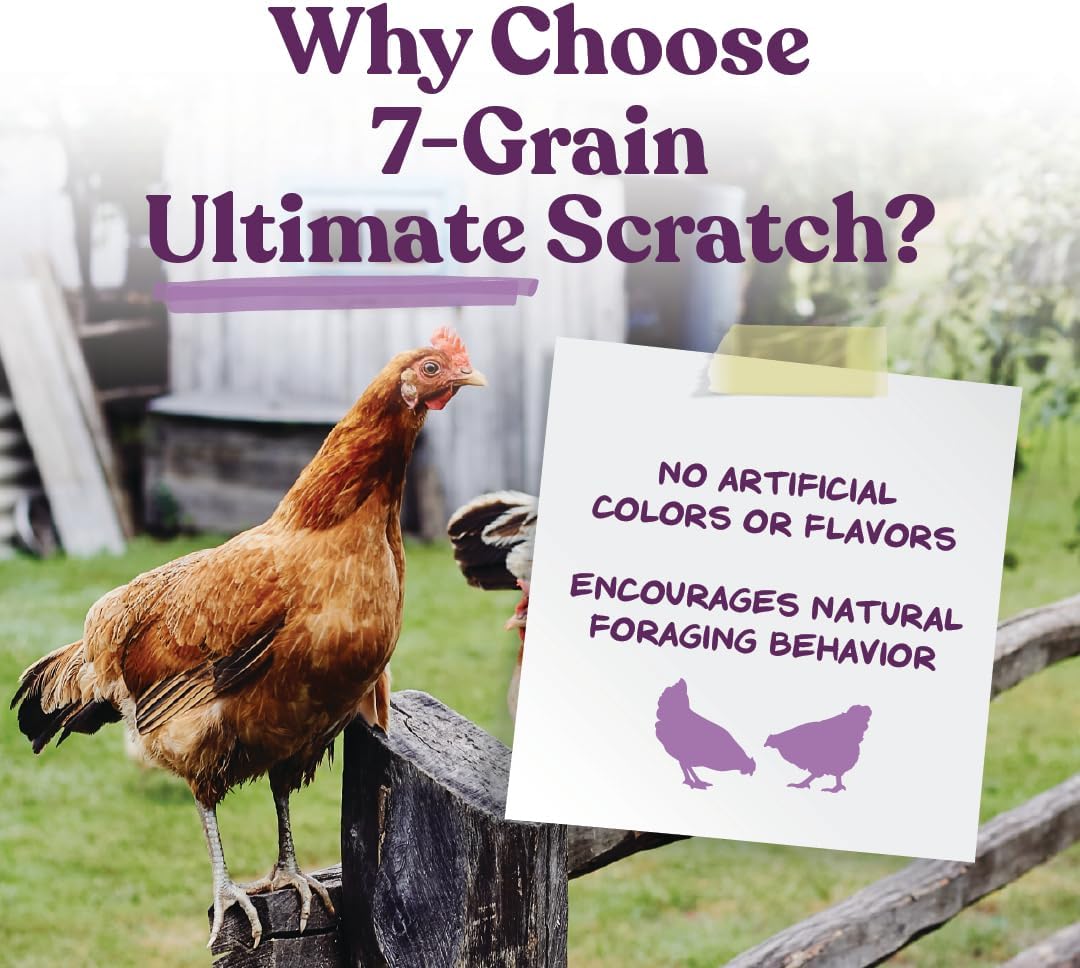
Scattering scratch in a run or deep litter system gives birds foraging activity that reduces boredom-related pecking. ATTRA’s Poultry: Organic and Pastured Production publication cites scratch scattering as a low-cost enrichment strategy appropriate for confined and semi-confined flocks. The carbohydrate density also produces a mild thermogenic effect during cold nights — feeding scratch in the late afternoon before a hard freeze gives birds extra metabolic fuel as they roost. This is a documented cold-weather management practice, not a myth.
The critical error reviewers of products like Manna Pro scratch blends raise repeatedly: mixing scratch into base pellet feed. Hens selectively eat the scratch and any mixed-in treats while leaving behind the nutritionally complete pellets — the avian equivalent of a child eating the croutons and abandoning the salad. Keep scratch separate, broadcast it on the ground or litter, and never blend it into the feeder. Penn State Extension’s backyard flock guidelines are explicit that treats of all kinds — combined — should not exceed 10% of daily feed intake.
Scratch grain blends are also generally appropriate for mixed chicken-and-duck flocks as a supplemental treat, with one caveat: ducks have a higher niacin requirement than chickens, as documented in FAO waterfowl nutrition references, so their base feed must be formulated for waterfowl. Scratch as a supplemental treat on top of a proper waterfowl ration is fine; scratch as a dietary staple for ducks is not.
Manna
$11.49
In stock on Amazon
Check price on AmazonDried Mealworms: The High-Protein Training and Wild Bird Crossover Option
Dried mealworms occupy a strong middle position for backyard operations that run both a chicken flock and a wild bird feeding station — a common homesteader pattern. Mealworms are the documented standard food for insectivorous songbirds including bluebirds, robins, and wrens. BSFL do not fill that role with the same palatability response in most wild bird species. If a single protein treat needs to serve double duty across a flock and a bluebird box program, mealworms are the practical choice.
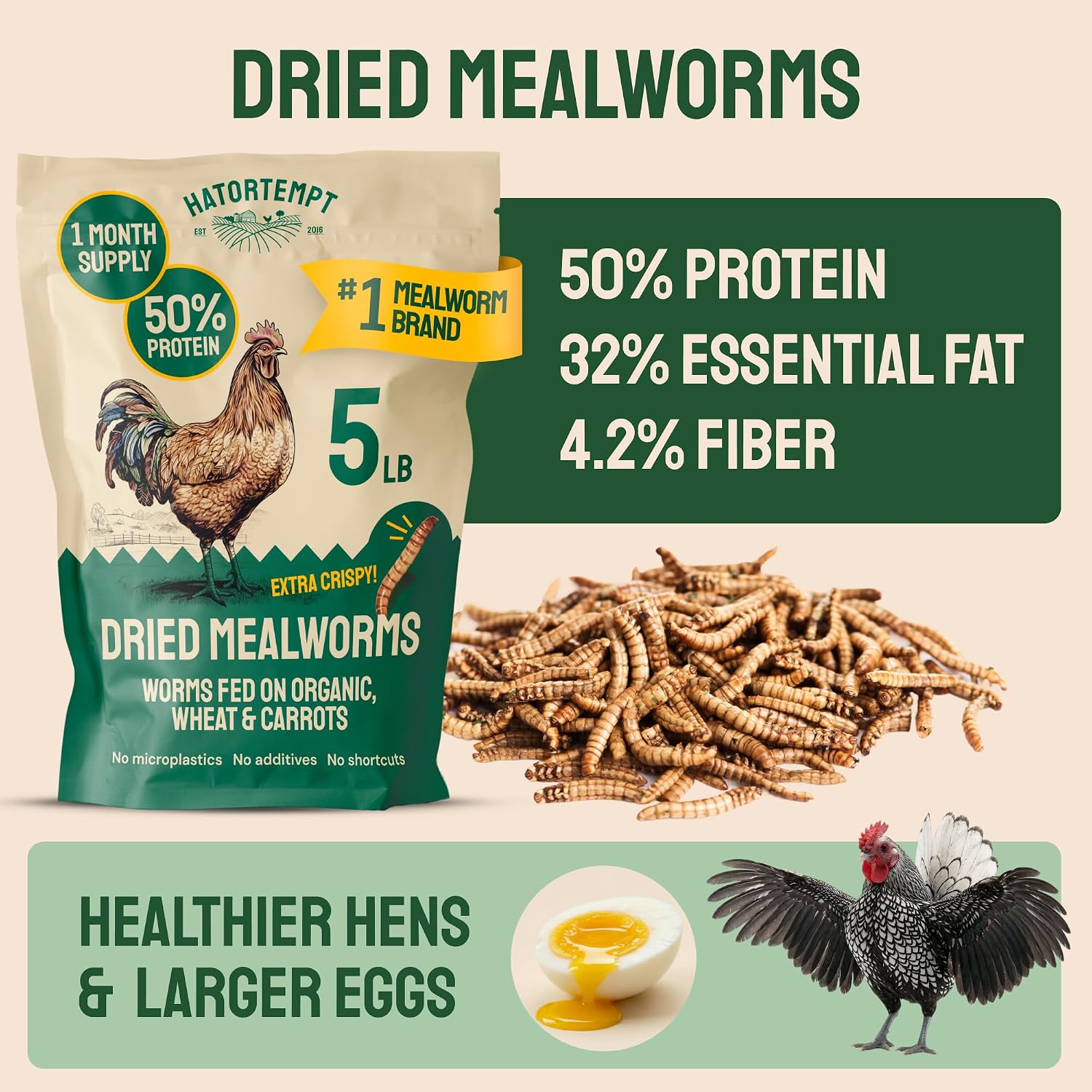
For chickens specifically, mealworms function best as high-value training rewards and as a molt protein supplement in operations that already maintain free-choice oyster shell. The Merck Veterinary Manual’s poultry nutrition guidelines recommend free-choice calcium supplementation — typically crushed oyster shell offered separately from base feed — as standard practice for laying flocks. Where oyster shell access is consistent and well-utilized, the calcium deficit inherent in mealworms is substantially offset. Where oyster shell access is unreliable or ignored by the flock, mealworms compound the deficit.
The fat content concern (25–28% on a dry-matter basis) is real but manageable at appropriate serving sizes. A small handful per bird per day keeps mealworm caloric contribution within reasonable bounds. The problem surfaces when mealworms are offered ad libitum or used as the primary feed during molt — a practice that can push dietary fat well above what a laying hen’s metabolism handles efficiently.
Manna
$15.49
In stock on Amazon
Check price on AmazonDried BSFL: The Premium Calcium-Forward Supplement
BSFL treats command a price premium over scratch and often over mealworms on a per-pound basis, and the repeat-purchase behavior across brands — I LOVE WORMS, Classic Flock, Joyprotyn, Eaton — suggests the premium is being validated by results. Reviewer patterns for BSFL brands are unusual in the treat category: owners repurchase at rates that look more like subscription staples than impulse snacks. The explanation offered most consistently is functional: keepers switched from mealworms specifically because of the calcium argument, and stayed because they saw results during molt and winter.
The calcium profile, documented in FAO black soldier fly larvae nutrient data, is the differentiating factor. At 0.9–1.5% calcium versus mealworms’ 0.05–0.1%, BSFL provide meaningful calcium alongside protein in a single treat — a combination that matters most during two windows: molt (when hens are under simultaneous protein and calcium stress from feather regrowth) and northern winters (when limited foraging reduces natural calcium intake and caloric needs are elevated). The Poultry Site’s coverage of calcium requirements in laying hens notes that daily calcium needs for a productive laying hen run approximately 4–5 grams, primarily sourced from base feed and free-choice supplements — but a treat that contributes rather than subtracts from that balance has compounding value over a laying season.
BSFL also demonstrate a stronger behavioral recall response than mealworms in consistent keeper reports. The more pronounced odor of dried BSFL compared to the relatively neutral scent of dried mealworms appears to drive a stronger and faster coop-entry response at dusk — a non-trivial management benefit for anyone who has chased hens around a yard in failing light.
The one legitimate objection is cost at scale. For flocks exceeding 25–30 birds using BSFL daily or near-daily, the per-pound price difference between BSFL and mealworms compounds significantly across a season. The mitigation is straightforward: prioritize large-format bag purchases. Buying 5 lb bags versus individual pouches can cut effective cost per pound by 30–40% on most BSFL brands. Subscription or auto-ship pricing layers another 5–15% reduction depending on the retailer. For a flock of 30 hens receiving a 1 oz BSFL serving daily — a reasonable supplemental amount — you’re moving through roughly 8 lbs per month. The difference between a budget-positioned BSFL brand at $4/lb and a premium brand at $8/lb is approximately $384/year, enough to cover a bag of high-quality complete feed.
Hatortempt
$39.99
In stock on Amazon
Check price on AmazonFeeding Thresholds and Common Mistakes
The 10% rule is the foundational constraint across all three categories. Penn State Extension’s backyard flock feeding guide states that all treats combined should not exceed 10% of total daily feed intake. For a standard-sized hen eating roughly 4–4.5 oz of complete feed per day, that’s approximately 0.4–0.45 oz of treats total — a small handful distributed across the flock.
Exceeding this consistently produces predictable consequences: diluted amino acid and micronutrient intake from the base ration, reduced laying frequency, and declining eggshell quality over time. The Merck Veterinary Manual’s poultry nutrition section identifies protein and calcium adequacy in the laying ration as primary drivers of sustained egg production and shell integrity — both of which erode when treats crowd out complete feed.
The most common structural mistake is not the treat itself but how it’s offered. Mixing any treat — scratch, mealworms, or BSFL — into the base feed feeder creates selective eating. Hens are efficient at identifying and consuming preferred items first. Broadcast scratch on the ground. Offer insect treats in a separate dish or scatter them across the run. Keep the main feeder stocked exclusively with complete layer feed.
Rehydration of dried insect treats is optional. Some keepers report improved uptake — particularly for younger birds or hens slightly off feed during molt — from a brief 30–60 second water soak before offering dried BSFL or mealworms. There is no published evidence that rehydration improves nutritional absorption meaningfully. If your birds eat dried product readily, the step adds no value.
The Decision Rule
For molt support, cold-weather calcium maintenance, or operations without reliable free-choice oyster shell: choose BSFL. The calcium profile documented in FAO nutrient data is genuinely differentiated, and the protein-plus-calcium combination addresses the two primary nutritional stresses of molt simultaneously.
For wild bird crossover use, high-value training rewards, or operations with consistent free-choice oyster shell already in place: dried mealworms are the appropriate tool. The higher protein density and proven palatability with insectivorous songbirds make mealworms the more versatile single-product choice in multi-species feeding contexts.
For behavioral enrichment, cold-weather calorie supplementation, or low-cost flock management on a tight feed budget: scratch grains fill that role — provided they are broadcast separately, never blended into the base feeder, and held within the 10% daily intake ceiling that Penn State Extension and ATTRA’s pastured poultry resources both recommend.
None of these three categories competes with a quality complete layer feed. They work alongside one — and the keepers who get consistent results treat them as precision tools rather than incidental snacks.