If you’ve ever stood at the feed store staring at a bag labeled “pond fish food” and wondered whether it was actually right for your bass, your koi, or your tilapia — you’re not alone. Pond fish feed works a lot like poultry feed: there are budget general-purpose options, there are species-specific premium formulations, and the gap between them matters more than the price tag suggests. A floating fish pellet — one that stays on the surface so fish feed visibly and you can monitor intake — designed for a catfish operation isn’t doing your ornamental koi any favors, and vice versa. This guide breaks down what separates game fish, koi, and tilapia feed formulations, including budget, mid-tier, and premium picks for each category, so you can choose the right bag before you buy.
Why Species and Life Stage Determine Everything
Here’s the short version: different fish have fundamentally different digestive systems, growth goals, and natural diets. A largemouth bass is a carnivore. A koi is an omnivore with a digestive tract optimized for plant-based material. A tilapia raised for the table is a herbivore-leaning omnivore that needs efficient feed conversion above all else. Feed them all the same pellet and at least two of those three are getting a suboptimal diet.
The key metrics that separate pond feeds are:
- Crude protein percentage — the total protein in the feed, expressed as a minimum on the guaranteed analysis panel
- Protein source — whether protein comes from fishmeal, soybean meal, corn gluten, insect meal, or a blend (this affects amino acid completeness and digestibility)
- Pellet type — floating vs. sinking; floating pellets let you observe feeding behavior, sinking pellets better match bottom-feeding species
- FCR (feed conversion ratio) — how many pounds of feed it takes to produce one pound of fish weight gain; lower is better and is especially critical in tilapia production
The FAO Fisheries and Aquaculture Department, in their technical guidance document “Feeds and Feeding of Fish and Shrimp,” establishes that species-specific amino acid requirements — particularly lysine and methionine — vary enough between carnivorous and herbivorous fish that a single universal formula will consistently under-serve at least one category. This isn’t theoretical: it shows up in slow growth rates, poor fin condition, and reduced disease resistance.
Game Fish Feeds: High Protein, Carnivore-Optimized
Game fish — bass, bluegill, walleye, trout, perch — are the most protein-demanding category in the backyard pond segment. Trout in particular sit at the extreme end, with published commercial formulations speccing trout grower pellets at 40–45% crude protein, with fishmeal as the primary protein source.
For bass and bluegill in a managed farm pond, Penn State Extension’s pond management materials recommend a minimum of 32% crude protein for grow-out phases and 36–40% during active stocking. Feeding below those thresholds doesn’t kill fish; it slows growth rates noticeably and can reduce recruitment in mixed-species ponds.
What to look for on the label:
- Fishmeal or poultry meal listed as the first ingredient (not soybean meal as the lead protein)
- Minimum crude protein ≥ 32% for bass/bluegill; ≥ 40% for trout
- Floating pellet format for surface observation
- Vitamin E and C supplementation (fish cannot synthesize vitamin C; it must be present in the feed)
Budget Pick: General Floating Pond Pellet (32% Protein)
A regional mill floating pellet at 32% crude protein with soybean meal blended alongside poultry meal covers bass and bluegill at grow-out phase without the price premium of a trout-specific formula. Pricing typically runs $18–$24 per 50 lb bag. The tradeoff is that protein source quality varies by mill, and amino acid completeness is less reliable than in named commercial brands. Acceptable for recreational ponds where growth rate is a secondary concern to stocking cost.
Kaytee
$24.90
In stock on Amazon
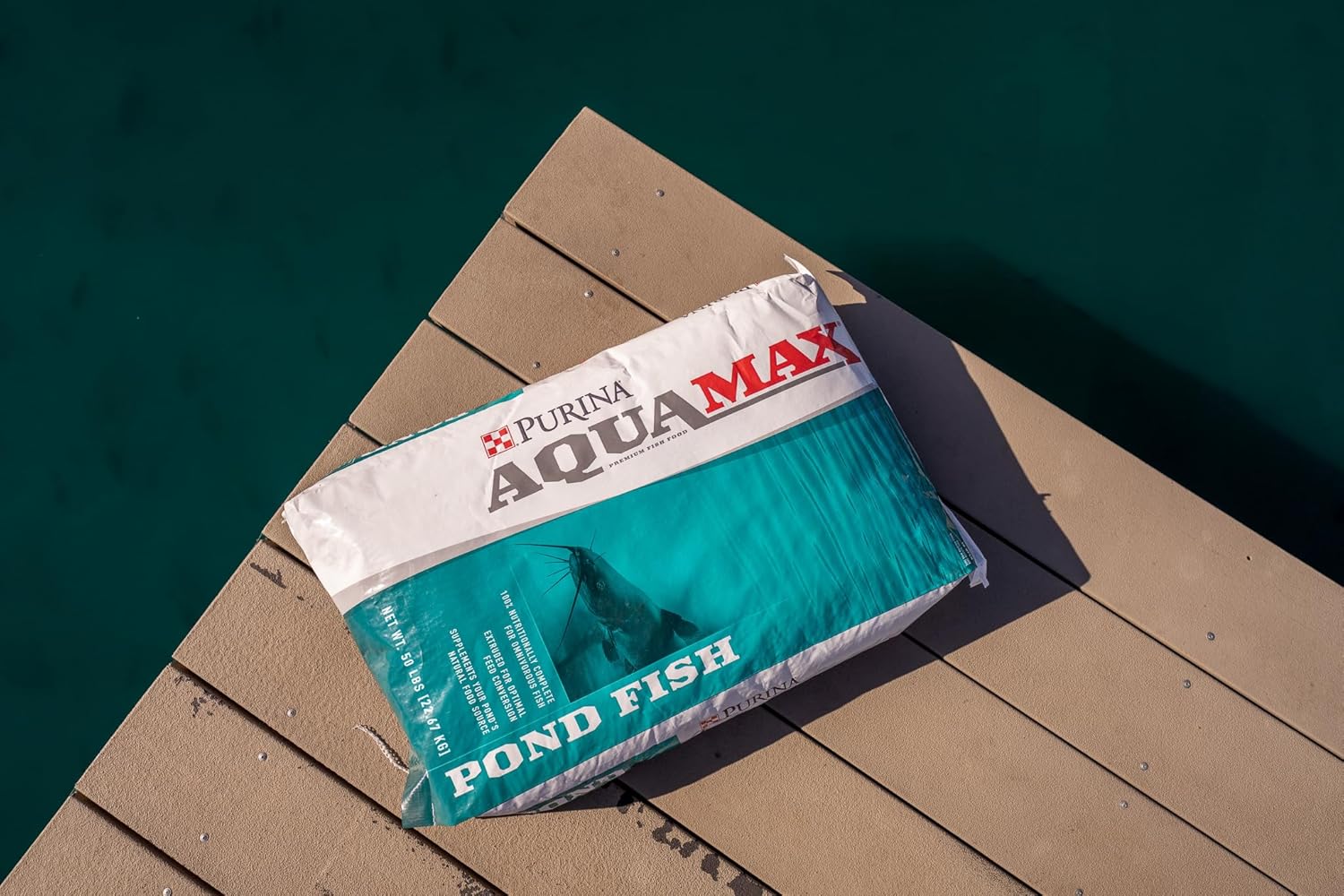
Check price on AmazonMid-Tier Pick: Purina AquaMax Sport Fish 500
Purina AquaMax Sport Fish 500 runs 40% crude protein with floating pellets and fishmeal as a leading ingredient. It is widely stocked at farm supply retailers and priced in the $28–$35 per 50 lb bag range as of mid-2026. For bass and bluegill ponds managed for recreation, this is the credible default: high enough protein to support healthy growth without the price premium of a commercial trout formula. The floating pellet format makes feeding observation practical.
Blue
$39.25
In stock on Amazon
Check price on AmazonPremium Pick: Rangen Trout Grower Pellets
Rangen is a major aquaculture feed manufacturer whose trout grower formulations sit at 40–45% crude protein with fishmeal-dominant protein sourcing. At $55–$75 per 50 lb bag depending on formulation and distribution channel, it is priced for serious aquaculture hobbyists stocking trout or walleye — not for recreational bass ponds where the cost premium doesn’t translate into proportional benefit. If you are stocking trout, the amino acid completeness and protein density justify the price.
Purina
$72.99
In stock on Amazon
Check price on AmazonKoi Feeds: It’s Not Just About Color
Koi feeds are the most marketing-laden category in the pond feed aisle. Bags promise “color enhancement,” “immune support,” and “probiotic blends,” and pricing runs from $12 for a 10 lb bag of basic floating pellets to $80+ for a 10 lb bag of a Japanese-formula wheat germ blend. Sorting real nutritional differences from label theater requires careful label reading.
The legitimate formulation differences in koi feeds:
Wheat germ formulas are genuinely appropriate for water temperatures below 55°F. Koi are cold-blooded, and their digestive activity slows significantly in cold water. High-protein formulas (above 35%) fed in cold water can lead to incomplete digestion and ammonia spikes — excess nitrogen released into the pond water — which stresses fish and degrades water quality. Wheat germ pellets at 26–30% protein are easier to digest in those conditions. ATTRA’s National Sustainable Agriculture Information Service, in their “Aquaculture Overview” publication, identifies this temperature-linked digestive shift as a primary feeding management variable for coldwater ornamental fish.
Color-enhancing formulas typically contain spirulina (a blue-green algae high in carotenoids) or astaxanthin. These compounds are genuine color precursors — koi cannot synthesize red and orange pigments independently; they must obtain them from diet. This is real science, not marketing. The question is concentration: budget blends may list spirulina as an ingredient but at low enough inclusion rates that the effect is minimal. Labels are not required to disclose inclusion percentages for individual ingredients, which makes direct comparison difficult.
Probiotic claims are the most speculative category. The Merck Veterinary Manual, in its fish nutrition section, notes that while probiotic supplementation shows promise in aquaculture settings, dose-response data for ornamental koi under backyard pond conditions is limited. Treat probiotic claims as a potential benefit rather than a proven one.
By Season: Koi Feed Protein Targets
| Water Temperature | Recommended Crude Protein | Pellet Preference |
|---|---|---|
| Below 50°F | Stop feeding or wheat germ ≤ 28% | Sinking or slow-sink |
| 50–65°F | 28–32% wheat germ formula | Floating |
| Above 65°F | 32–38% standard formula | Floating |
| Peak growth (70°F+) | 35–42% high-growth formula | Floating |
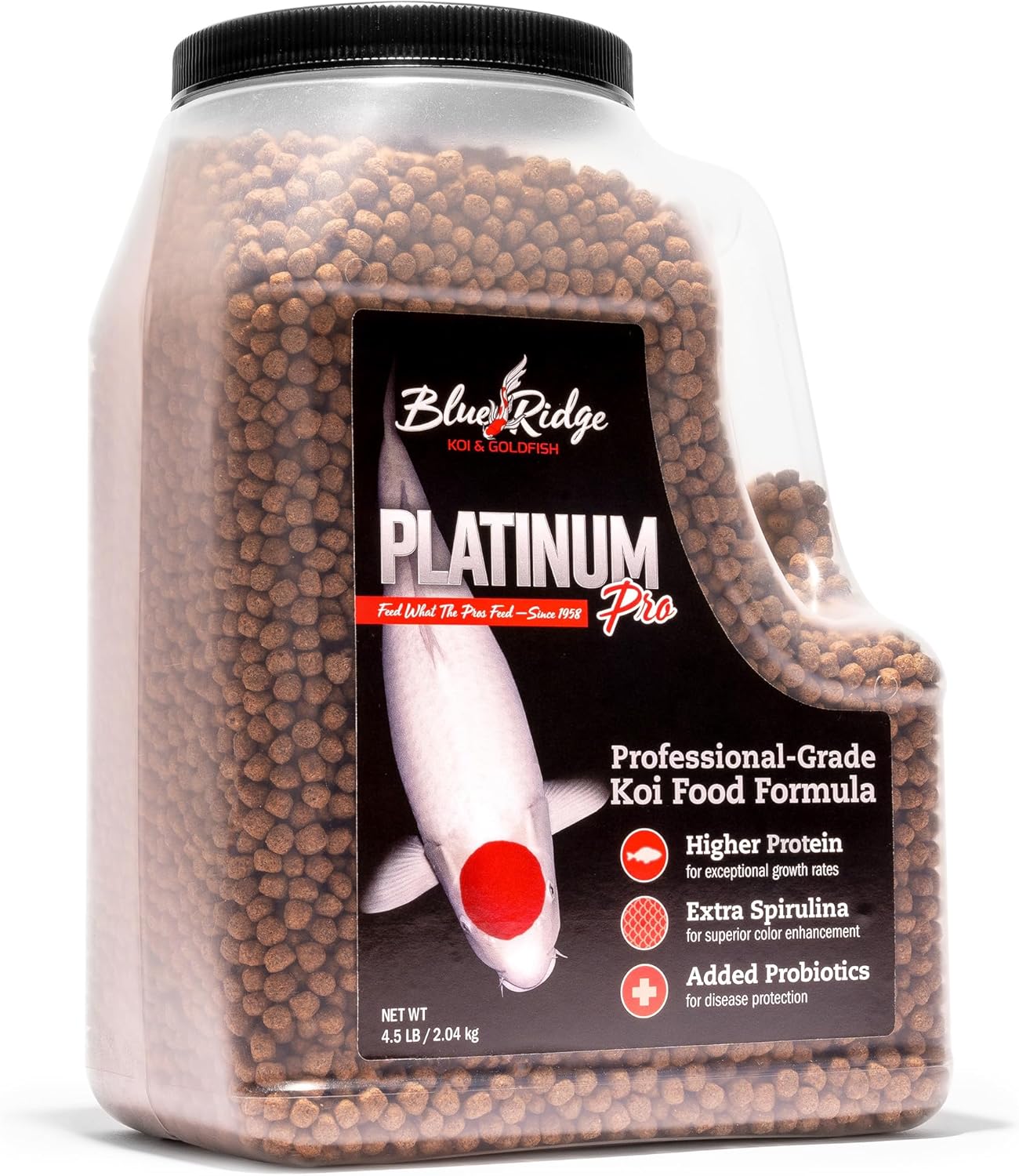
Budget Pick: Regional Mill Floating Koi Pellet (32% Protein)
A utility floating pellet at 32% protein and $18–$22 per 20 lb bag will maintain healthy fish through the active feeding season. It will not drive color enhancement or support cold-water digestion — buy a wheat germ formula separately for fall and spring transitions if you are in a climate with meaningful seasonal temperature swings. For a utility pond stocked with common koi where fish value is low, this is the economically rational choice.
Kaytee
$24.90
In stock on Amazon
Check price on AmazonMid-Tier Pick: Standard Spirulina-Supplemented Floating Pellet
A mid-range koi formula at 35–38% protein with spirulina listed as a supplemental ingredient runs approximately $28–$38 per 20 lb bag. This tier covers the active growth season effectively and provides some carotenoid support for pigmentation without the full premium of a Japanese-style wheat germ formulation. Suitable for ponds with moderate fish investment where color quality matters but does not justify top-shelf pricing.
Blue
$39.25
In stock on Amazon
Check price on AmazonPremium Pick: Blue Seal Koi Pellets (Wheat Germ Base, Spirulina-Supplemented)
Blue Seal’s koi pellet line uses wheat germ as a base with spirulina supplementation and runs approximately $35–$45 per 20 lb bag. For hobbyists stocking a decorative pond with fish valued above $100 each, the carotenoid content and wheat germ digestibility in cold-water transitions are genuinely reflected in pigmentation outcomes and fish condition over a season. This is a credibly formulated product at a premium price, not label theater.
Purina
$72.99
In stock on Amazon
Check price on AmazonTilapia Feeds: FCR Is the Whole Conversation
If you’re raising tilapia for food production — even at small scale — your decision framework is almost entirely about feed conversion ratio (FCR). FCR measures how efficiently your fish turn feed into body weight: an FCR of 1.5 means 1.5 lbs of feed produces 1 lb of fish. The FAO Fisheries and Aquaculture Department’s aquaculture nutrition guidance places industry benchmarks for well-managed tilapia production between 1.4 and 1.8. Poor feed selection or overfeeding can push FCR above 2.5, which changes the cost math dramatically.
Tilapia are efficient omnivores that can utilize plant-based proteins effectively — unlike trout, they do not require fishmeal-dominant diets. This makes their feeds significantly cheaper per bag. Standard tilapia grow-out formulations typically run 28–32% crude protein with soybean meal as the primary protein source, floating pellets, and a vitamin/mineral pack. Pricing in mid-2026 ranges from $18–$28 per 50 lb bag, making tilapia feed among the most affordable in the pond segment.
The USDA National Agricultural Library’s aquaculture nutrition resources identify lysine as the first limiting amino acid in soy-based tilapia diets. Feeds with some fishmeal inclusion improve amino acid completeness and can modestly reduce FCR compared to pure-soy formulas — relevant if maximum growth rate is your goal. ATTRA’s “Aquaculture Overview” supports a three-stage feeding progression for small-farm tilapia production: fingerling crumble (36% protein, small particle) → grow-out pellet (28–32% protein, floating) → finishing pellet (moderate protein reduction, matched to final weight targets).
Pellet size deserves explicit attention: tilapia fingerlings under 2 inches need crumble-size particles of 1–2mm. Feeding adult-size pellets to fingerlings results in uneaten feed, ammonia spikes, and poor early growth. Most manufacturers offer a fingerling/starter SKU alongside grow-out and finishing formulas. Confirm you are buying the correct life stage before ordering.
Budget Pick: Soy-Based Tilapia Grow-Out Pellet (28% Protein)
A soy-dominant tilapia grow-out formula at 28% protein and $18–$22 per 50 lb bag is the entry point for small-scale production. FCR performance is adequate in well-managed systems. The tradeoff is higher phosphorus load — relevant in recirculating systems or aquaponics setups where phosphorus accumulation affects water quality and plant nutrient balance.
Kaytee
$24.90
In stock on Amazon
Check price on AmazonMid-Tier Pick: Balanced Soy/Fishmeal Blend Tilapia Pellet (30–32% Protein)
A tilapia-specific formula with a partial fishmeal inclusion alongside soybean meal improves lysine balance and typically produces modestly better FCR than a pure-soy formula. Priced at $22–$28 per 50 lb bag, this tier is the practical default for operators running 200–500 tilapia in tanks or a lined pond where feed cost and growth rate both matter. The floating pellet format is standard at this tier and supports feeding behavior observation.
Blue
$39.25
In stock on Amazon
Check price on AmazonPremium Pick: High-Protein Fingerling/Starter Crumble + Dedicated Grow-Out System
For operators running the full three-stage production model — fingerling crumble at 36% protein through a dedicated grow-out pellet to a finishing formula — total feed cost per batch increases but FCR outcomes improve measurably when each life stage is fed the correctly sized and formulated product. Specialty fingerling crumbles from aquaculture-focused manufacturers run $30–$40 per 40 lb bag. This approach is most defensible for operators selling tilapia by the pound, where FCR differences of 0.2–0.3 compound meaningfully across a production cycle.
Purina
$72.99
In stock on Amazon
Check price on AmazonThe Decision Matrix: If X, Then Y
You don’t need a different answer for every situation — you need a clear decision rule for your situation:
If you’re stocking a recreational game fish pond (bass, bluegill, perch): Buy a floating pellet at minimum 32% crude protein with fishmeal as a leading ingredient. Purina AquaMax Sport Fish 500 is the credible mid-tier default. Budget more for trout-specific formulas only if you are actually stocking trout. Do not use koi feed or tilapia feed as a substitute — the protein levels and amino acid profiles are mismatched for carnivores.
If you’re keeping ornamental koi with meaningful investment in your fish: Buy seasonally. Stock a wheat germ formula for spring and fall transitions and cold-water periods, and a 35–38% high-growth formula for peak summer. For fish valued above $100 each, the color-enhancement premium in Blue Seal or comparable formulas is grounded in carotenoid science — it is not pure marketing.
If you’re raising tilapia for food production: Prioritize FCR over protein percentage on the label. A well-formulated 28% protein tilapia-specific feed with good amino acid balance will outperform a generic 32% formula not optimized for the species. Match pellet size to life stage consistently. If you’re running an aquaponics system, evaluate phosphorus load as a secondary filter when choosing between soy-dominant and blended formulas.
If you’re stocking a mixed-species pond: You will be compromising on feed optimization for at least one species. A 32% floating pellet in the mid-range covers the most ground without severely under-serving any of your stock. Accept that you are managing a trade-off, not solving for an optimum.
The core principle that both the FAO Fisheries and Aquaculture Department and Penn State Extension’s pond management guidance emphasize: the best feed for your pond is the one matched to your primary species’ life stage and metabolic needs — not the bag with the best marketing, the lowest price per pound, or the widest availability at your nearest retailer. On a per-fish, per-pound-gained basis, the right feed is almost always cheaper than the wrong one.