If you’ve ever walked into a pet store and grabbed the cheapest sinking pellets off the shelf, you already know the feeling: cloudy water by morning, fish poking at food and then ignoring it, and a nagging sense that something’s off. Fish food — specifically sinking pellets (pellets dense enough to drop through the water column instead of floating on top, which matters for bottom-feeding and mid-water species that don’t naturally surface-feed) — has gotten genuinely more sophisticated in the last decade. The biggest shift is insect protein: black soldier fly larvae (BSFL), a farmed insect increasingly used as a partial or primary protein source in premium aquarium diets. Three brands have emerged as the most-discussed in this space among serious hobbyists and small-scale aquaculture keepers: Fluval Bug Bites, Hikari Sinking Carnivore, and Xtreme Cichlid Peewee. This article breaks down how they compare on formulation, pellet sizing, water clarity, and real-world species fit — so you can make a confident, informed call for your specific tank.
What the Labels Actually Say: Formulation Breakdown
Published guaranteed analyses — the section of a feed label that lists minimum crude protein, minimum crude fat, maximum crude fiber, and maximum moisture — are your first comparison point. Here’s where these three stand based on manufacturer-published specifications:
| Product | Crude Protein (min) | Crude Fat (min) | Primary Protein Source |
|---|---|---|---|
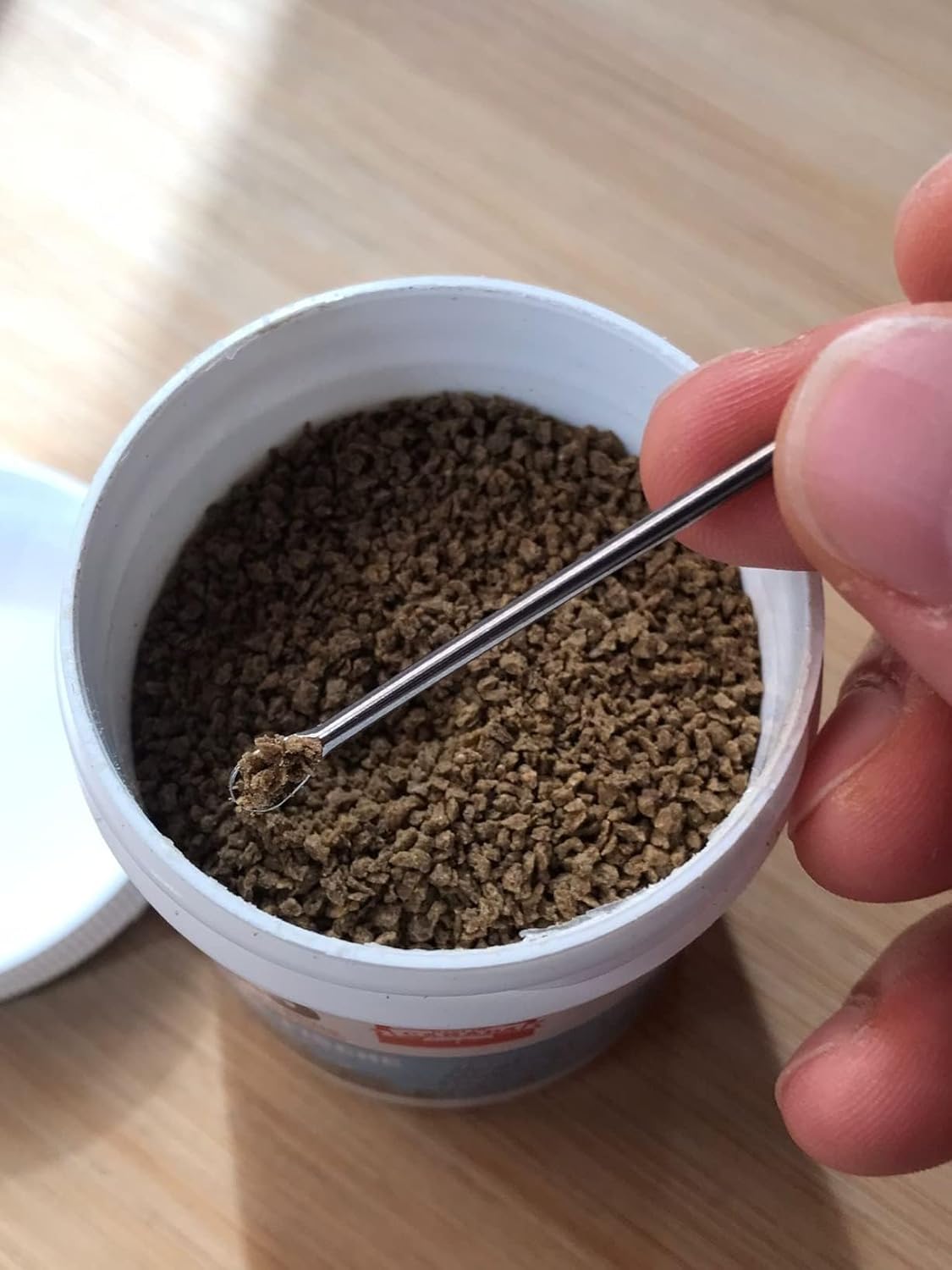
| Fluval Bug Bites (small granule) | 40% | 8% | Black soldier fly larvae |
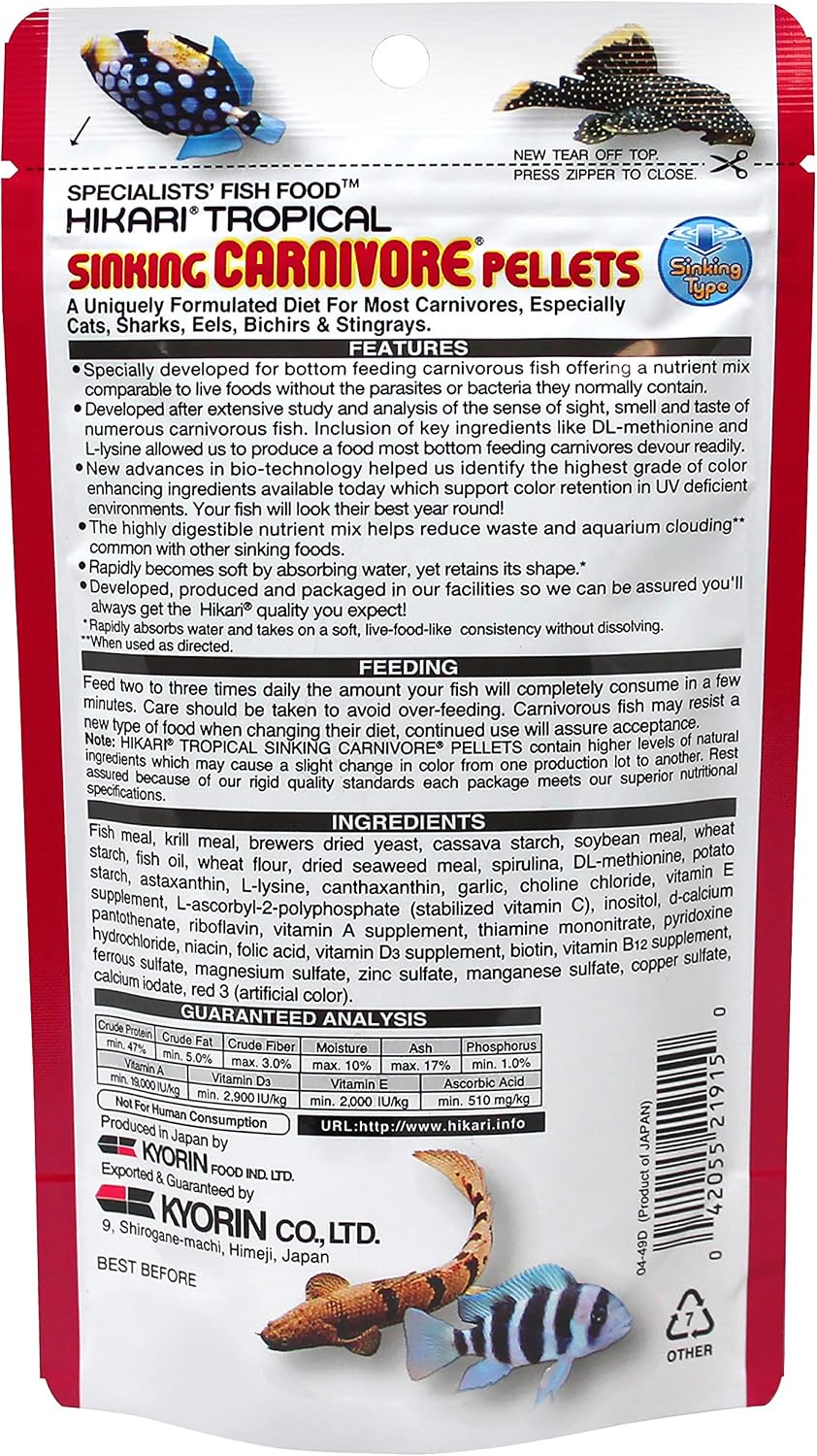
| Hikari Sinking Carnivore | 42% | 5% | White fish meal + krill |
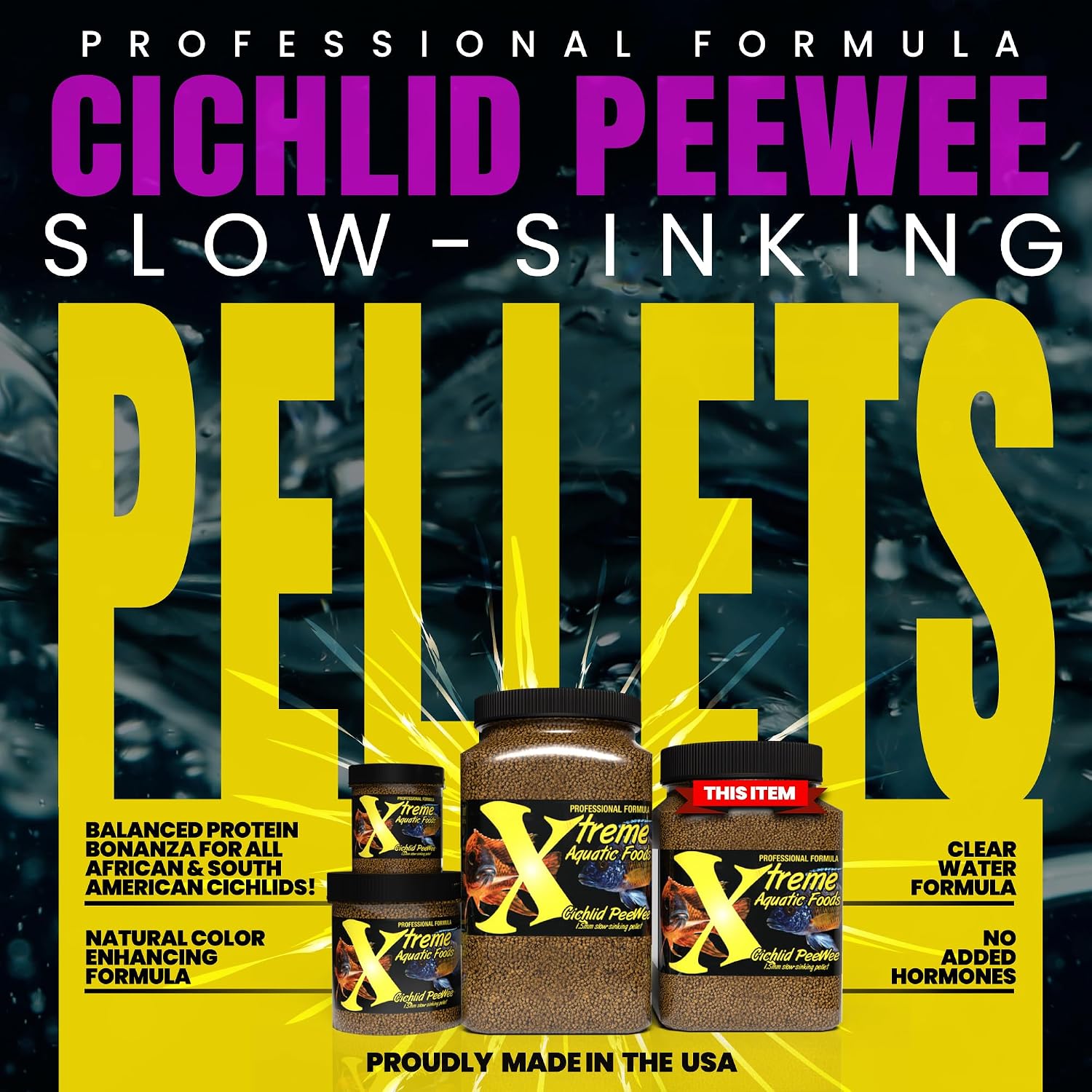
| Xtreme Cichlid Peewee | 40% | 10% | Whole herring + krill |
On paper, these three are remarkably close in crude protein — all landing in the 40–42% range, which is appropriate for omnivorous to carnivorous tropical fish. But the crude protein number alone is where most buyers stop reading, and that’s where the important differences hide.
Fluval Bug Bites: Insect-Forward Formulation
Fluval Bug Bites leads with BSFL as the first ingredient, meaning it dominates the formula by weight. BSFL has a favorable amino acid profile for many tropical fish, including solid levels of lysine and methionine — two amino acids (protein building blocks) that drive growth and immune function, as documented in the Merck Veterinary Manual, “Nutrition in Fish,” Merck & Co., 2024. The fat profile leans toward lauric acid, a medium-chain saturated fat naturally abundant in BSFL, which some aquaculture researchers flag as potentially beneficial for gut health in certain species, though long-term comparative data in ornamental fish remains limited.
The Food and Agriculture Organization of the United Nations, in its 2023 technical document “Insects for Food and Feed,” notes that BSFL meal can replace 25–50% of fishmeal in aquafeeds without performance loss across many species trials — a meaningful endorsement for a food that leads with it as the primary ingredient.
Hikari
$10.79
In stock on Amazon
Check price on AmazonHikari Sinking Carnivore: Traditional Fishmeal Approach
Hikari Sinking Carnivore takes a more traditional fishmeal-forward approach. White fish meal and krill are well-understood protein sources with decades of performance data behind them. Krill adds natural astaxanthin — a pigment that enhances the red and orange coloration of fish — which matters for cichlid and discus keepers who care about color expression. The lower fat content (5% minimum) makes this a leaner option worth noting for species prone to fatty liver disease with overfeeding.
The pellet design is notably dense, a result of Hikari’s extruded pellet manufacturing process. Extrusion — the method by which ingredients are cooked and pressed under heat and pressure — produces a slow-disintegrating pellet that holds together well through a feeding session, a quality signal discussed further in the water clarity section below.
Xtreme
$32.99
In stock on Amazon
Check price on AmazonXtreme Cichlid Peewee: Whole-Prey Ingredients
Xtreme Cichlid Peewee differentiates itself with whole herring as a primary ingredient rather than rendered fish meal. Whole prey ingredients preserve a broader range of naturally occurring lipids (fats) and micronutrients that can be degraded in the meal-rendering process — a point addressed in aquaculture nutrition literature summarized by the National Sustainable Agriculture Information Service (ATTRA/NCAT) in its publication “Sustainable Aquaculture Overview.” The higher crude fat floor (10%) makes this the richest option calorie-for-calorie — a feature, not a flaw, for high-metabolism fish like larger cichlids, but worth managing carefully with slower-metabolism species.
Fluval
$5.94
In stock on Amazon
Check price on AmazonThe Pellet Size Problem (and Why It’s the #1 Buyer Regret)
Here’s the practical issue that spec sheets don’t solve: getting the wrong pellet size for your fish is one of the most common and frustrating buying mistakes in this category. Getting this wrong means fish physically cannot accept the food — reviewers across aggregated hobbyist feedback consistently flag accounts of premium products being donated or discarded because the pellet was simply too large for the fish in the tank.
Fluval Bug Bites is available in small granules (0.25–1.0 mm), medium granules (1.0–1.5 mm), and large granules/sticks (2.0–3.0 mm). The small granule format has the broadest species applicability — owners consistently report success using it across bettas, pea puffers, corydoras, kuhli loaches, and even dwarf shrimp and snails in nano setups. The large format is genuinely large and appropriate for fish with a mouth gap of roughly one inch or more. If you are uncertain, size down. Fish can always eat a smaller pellet; they will struggle or refuse an oversized one.
Hikari Sinking Carnivore comes in a single pellet size roughly 8–10 mm in length — clearly designed for larger predatory fish. This is not a community tank food. Among the more memorable owner accounts in aggregated reviews is a keeper who feeds Hikari Sinking Carnivore to an African Lungfish — a prehistoric air-breathing fish that can reach 24 or more inches — and reports consistent acceptance from an animal notoriously selective about prepared foods. That is a meaningful real-world signal for hobbyists keeping large predatory or semi-predatory species like arowanas, large oscars, or oversized catfish.
Xtreme Cichlid Peewee takes its name seriously: the “Peewee” designation refers to a pellet in the 1 mm range, specifically engineered for small-to-medium cichlids who need a sinking pellet they can actually maneuver. Owner accounts describe testing it against well-regarded alternatives and returning to Xtreme because even finicky fish accepted it more consistently. For cichlid keepers running species like Apistogramma, smaller African cichlids, or juvenile New World cichlids, the Peewee size often hits the sweet spot that larger pellets miss.
A working sizing guide based on published product specifications and aggregated owner reports:
| Fish Size / Mouth Gap | Recommended Product | Format |
|---|---|---|
| Under 1 inch / nano species | Fluval Bug Bites | Small granule (0.25–1.0 mm) |
| 1–3 inches / small-medium cichlids | Xtreme Cichlid Peewee | 1 mm pellet |
| 1–3 inches / community mixed | Fluval Bug Bites | Medium granule (1.0–1.5 mm) |
| 3–6 inches / medium carnivores | Fluval Bug Bites or Xtreme | Large granule / Peewee |
| 6+ inches / large predatory fish | Hikari Sinking Carnivore | 8–10 mm pellet |
Water Clarity as a Quality Signal
“Doesn’t cloud the water” appears repeatedly in owner accounts across all three products — and it is worth understanding why this matters beyond aesthetics.
Cloudy water after feeding is almost always caused by excess starch binders or poorly bound protein in the pellet formulation. When a pellet breaks apart rapidly and dissolves into the water column, it does two things: it spikes ammonia as bacteria process the waste, and it signals that the pellet’s ingredient quality or manufacturing process is lower than it should be. The Merck Veterinary Manual, in “Nutrition in Fish” (Merck & Co., 2024), identifies water-stable pellets as a meaningful quality indicator in aquafeeds — stability requires proper extrusion and a formulation with appropriate binders that do not rely primarily on high-starch fillers.
All three products in this comparison consistently earn positive marks for water clarity, but the mechanism differs. Fluval Bug Bites’ BSFL-heavy formulation is naturally lower in starch than grain-forward budget feeds. Hikari’s extrusion manufacturing process produces a very dense, slow-disintegrating pellet. Xtreme’s whole-ingredient approach similarly results in a pellet that holds together well through a feeding session.
If you are currently feeding a budget food and seeing daily cloudiness, the ingredient to audit is the starch source: wheat flour, corn meal, and rice bran are common high-starch fillers that drive dissolution and turbidity in the water column.
The Decision Frame: Which Product Fits Your Tank
You have read the specs. Here is where to land based on species fit and tank type.
Best for Nano and Community Tanks: Fluval Bug Bites
If you are running a nano tank or community tank with mixed small species — including invertebrates like shrimp and snails — Fluval Bug Bites small granules is the most defensible choice. The insect-protein base is appropriate for omnivores, the size works across a wide range of mouth sizes, and aggregated owner reports confirm it across a genuinely diverse species list. It is not the cheapest option per ounce, but it is the most versatile crossover product in this comparison group.
Hikari
$10.79
In stock on Amazon
Check price on AmazonBest for Large Predatory Fish: Hikari Sinking Carnivore
If you are keeping large predatory fish — oscars over 8 inches, arowanas, African lungfish, large catfish, or similarly sized carnivores — Hikari Sinking Carnivore is formulated for exactly this niche. The pellet size alone filters out misuse. The fishmeal-and-krill base is well-matched to obligate carnivores, and the brand’s long track record with specialist keepers is a meaningful signal. The added astaxanthin from krill supports color expression in species where that matters.
Xtreme
$32.99
In stock on Amazon
Check price on AmazonBest for Small-to-Medium Cichlids: Xtreme Cichlid Peewee
If your focus is cichlids — particularly small-to-medium species where pellet size is frequently the limiting factor — Xtreme Cichlid Peewee earns its reputation. Owner accounts of finicky fish consistently accepting it, combined with the 1 mm pellet format and a whole-herring protein base, make it the targeted pick for this use case. The higher fat content (10% minimum) is appropriate for the metabolic demands of active cichlid species. For Apistogramma keepers, smaller African cichlid tanks, or juvenile New World cichlid grow-out, this is the pick that resolves the pellet-size frustration most directly.
Fluval
$5.94
In stock on Amazon
Check price on AmazonOne honest caveat on the BSFL-versus-fishmeal debate: published aquaculture research — including the Food and Agriculture Organization of the United Nations’ 2023 document “Insects for Food and Feed” and the work of Tacon and Metian in their 2008 Aquaculture journal paper “Global Overview on the Use of Fish Meal and Fish Oil in Industrially Compounded Aquafeeds” — suggests BSFL can match or approach fishmeal performance for many species at appropriate inclusion rates. But “superior” depends heavily on species, life stage, and what percentage of the diet BSFL constitutes. For most ornamental tropical fish, all three formulations here represent meaningful quality upgrades over commodity feeds. The choice comes down to species fit and pellet logistics, not a universal protein hierarchy.
Frequently Asked Questions
How do I choose the right pellet size for my fish? The practical rule: a pellet should be no larger than half the fish’s relaxed mouth gap. When in doubt, go smaller. Fish can always eat down from a small pellet; they will spit out or avoid oversized ones. Use the sizing table above as your starting framework, then confirm with the manufacturer’s species recommendations.
Can I feed Fluval Bug Bites to shrimp and snails, not just fish? Owners consistently confirm the small granule format works across cherry shrimp, amano shrimp, and snails in nano setups. The pellets sink fully and break down gradually, making them accessible to invertebrates that graze rather than strike. The BSFL protein base is appropriate for omnivorous invertebrates.
What does “slow sinking” mean in practice, and which fish benefit most? Slow sinking means the pellet descends at a rate that mid-water fish can intercept before it reaches the substrate — typically a controlled descent over 15–45 seconds depending on pellet density. This benefits species that feed in the water column but won’t surface-feed: most cichlids, many tetras, discus, and similar fish. Purely bottom-dwelling species like corydoras often do fine with both slow-sinking and fast-sinking pellets since they scavenge from the substrate either way.
Why does cheap fish food cloud my tank? High-starch binders — wheat flour, corn starch, rice bran — are the primary culprits. They hold a pellet together at low cost but dissolve quickly in water, releasing fine particulate and spiking ammonia. Better-formulated pellets use higher protein content and proper extrusion to produce water-stable pellets that hold together through a feeding session.
Is BSFL actually superior to fishmeal for tropical fish? Context-dependent. The Food and Agriculture Organization of the United Nations’ 2023 document “Insects for Food and Feed” shows BSFL can match fishmeal performance for many species at appropriate inclusion rates. BSFL has a favorable essential amino acid profile and naturally occurring lauric acid that may support gut health. For most ornamental tropical fish, it is a genuinely high-quality protein source — but it is not universally better than quality fishmeal for all species and life stages.
Can I use the same food for both cichlids and community tank fish? It depends on pellet size more than formulation. A 1 mm sinking pellet like Xtreme Cichlid Peewee can cross over to larger community fish. A large carnivore pellet like Hikari Sinking Carnivore cannot. If you want one food across a mixed community-and-cichlid setup, Fluval Bug Bites small granules is the most practical crossover option based on its documented multi-species owner reports.