If you’ve ever watched a hen pick through her feed and wonder whether she’s getting everything she needs from a single bag — you’re already asking the right question. A complete layer ration (a feed blended to meet the nutritional requirements of egg-laying hens) handles protein, energy, and most vitamins, but it cannot do the whole job on its own. Chickens need grit — small, hard particles they store in their gizzard (a muscular stomach organ) to grind food, since they have no teeth — and laying hens need extra calcium to build strong eggshells. Treats, meanwhile, can be powerful behavioral tools or quiet protein drags, depending on which ones you choose and how often you offer them. This guide walks through every layer of the supplement stack: what each piece does, where the tradeoffs live, and exactly how to size the decision for your flock.
Grit: The Grinding System Your Feed Bag Can’t Replace
Think of grit as your flock’s teeth. Chickens swallow feed whole, and the gizzard does the mechanical work of breaking it down — but only if it contains enough hard, angular particles to create friction. Hens eating nothing but commercial crumble or pellets (uniformly sized, pre-ground feed) have less urgent need for grit, because those particles break down relatively easily. The moment you introduce whole grains, scratch feed (a mix of cracked or whole grains fed as a treat or supplement), or anything foraged from the yard, grit becomes non-negotiable.
Insoluble grit — granite or flint — is the workhorse here. It accumulates in the gizzard and stays there for weeks, doing slow grinding work. Soluble grit like oyster shell dissolves in the digestive process and cannot do the mechanical job. This distinction matters more than most label copy suggests.
The size-match problem is real. Across aggregated reviews of standard chicken grit products, a recurring concern emerges for keepers of small birds: grit sized for standard-breed hens (particles often 3–5 mm) can pose a choking or impaction risk for bantam breeds and miniature ducks like Call Ducks, which typically weigh under 1.5 pounds. If your flock is mixed — standard Barred Rocks alongside bantam Cochins or a pair of Call Ducks — you need two separate grit sizes, or you default to the smaller size for everyone. Penn State Extension’s feeding guide for small and backyard flocks recommends offering grit free-choice in a separate container rather than mixing it into feed, which also sidesteps the size-mismatch problem by letting each bird self-regulate intake.
Offer grit free-choice, not mixed in. Hens are remarkably good at regulating their own grit consumption. A small dish or hanging feeder kept consistently filled is the standard approach. Consumption will spike when you introduce whole-grain treats or during molting, when feed texture changes, and will slow during periods of confined, pelleted feeding.
Calcium: Why Layer Feed Alone Often Falls Short
A laying hen in peak production deposits roughly 2 grams of calcium into each eggshell — and her skeleton can only bank so much. The Merck Veterinary Manual’s poultry nutrition section notes that laying hens require approximately 4 grams of calcium per day during peak lay, with shell quality degrading noticeably when intake drops below that threshold. Most commercial layer rations are formulated to 3.5–4% calcium, which covers the baseline — but that math assumes your hens are eating the full recommended daily intake of feed and no more. In practice, dominant hens eat more, subordinate hens eat less, and high-treat households routinely dilute the calcium density of the overall diet without realizing it.
Free-choice calcium supplementation is the practical fix. The two main options are:
- Crushed oyster shell — soluble calcium carbonate, highly palatable, fast-absorbing. The flake size matters: reviewers consistently report that hens eagerly consume coarser flake oyster shell and show visible eggshell improvement quickly (often within a week to ten days), while very fine powder is often ignored or wasted.
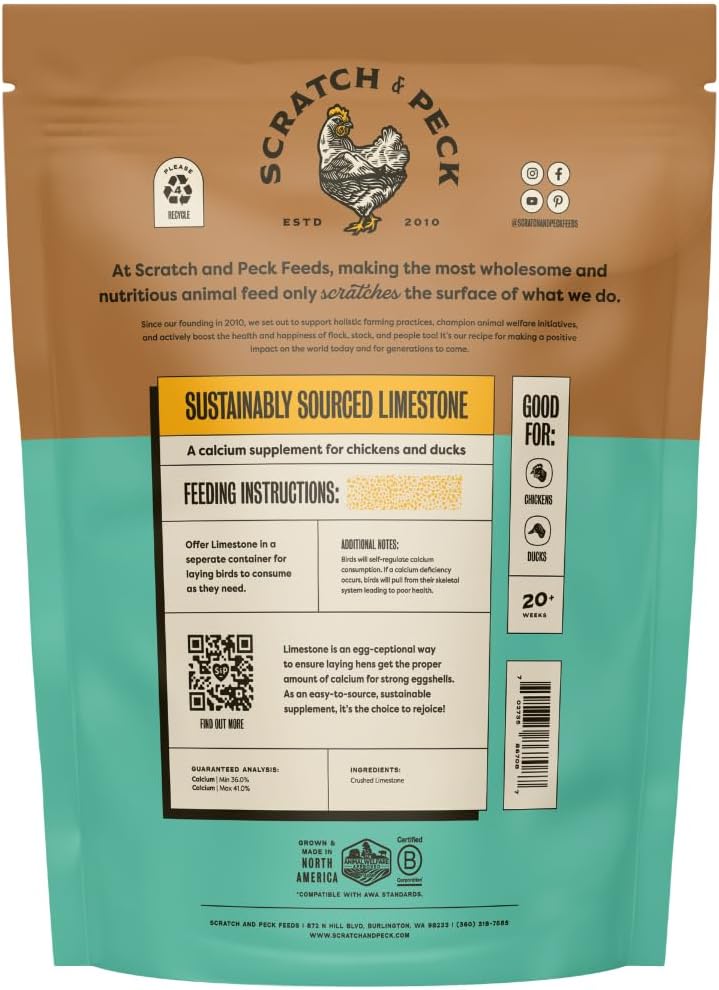
- Aragonite / limestone flour — also calcium carbonate, available in granular or flake forms. Buyers of flaked limestone products frequently note strong palatability and rapid uptake. The Poultry Site’s coverage of calcium requirements confirms that coarser particle sizes (2–4 mm) are associated with better overnight calcium retention, since hens form shells largely at night and benefit from a slow-release calcium source.
Will free-choice calcium hurt roosters or non-laying birds? This is a genuinely common concern, and the answer is nuanced. Per ATTRA’s poultry production guide, healthy birds with functional kidneys self-regulate calcium intake well. Excess calcium consumed occasionally is excreted without lasting harm in most birds. However, chronic, heavy overconsumption in non-laying birds — particularly roosters — has been associated with kidney stress in some published flock health reviews. The practical takeaway: free-choice calcium is standard practice and is widely considered safe for mixed flocks, but if your rooster is visibly camped out at the oyster shell dish every day, it’s worth a conversation with your avian vet. Most roosters show little interest in calcium supplements because they feel no physiological pull toward it.
Treats: The Behavioral Upside and the Protein Math
Treats are where flock management gets genuinely interesting — and where the most common nutritional mistakes happen. The rule of thumb backed by Penn State Extension and widely repeated in poultry nutrition literature: treats should not exceed 10% of daily feed intake by weight. A standard laying hen eats roughly a quarter pound (about 115 grams) of feed per day, so 10 grams of treats — a small handful — is the practical ceiling before you start diluting the protein and calcium density of the ration.
Black Soldier Fly Larvae (BSFL): The High-Value Protein and Calcium Stack
Black soldier fly larvae — sold dried under various brand names — have become the dominant premium treat in the backyard segment, and the pattern in owner reviews is unusually consistent: hens go enthusiastic at the sight of the bag in a way that makes them highly effective as a behavioral training tool. One frequently cited use case in Scratch and Peck Feeds Grubs reviews: using BSFL to call hens reliably into the coop at dusk without chasing. If you’re managing free-range birds or training new pullets (young hens not yet at laying age) to coop locations, this conditioned response is operationally useful.
The nutritional case for BSFL over dried mealworms is worth stating plainly:
By the numbers — BSFL vs. Dried Mealworms (published spec comparison):
| Metric | Dried BSFL (typical) | Dried Mealworms (typical) |
|---|---|---|
| Crude Protein | ~40–45% | ~50–55% |
| Calcium | ~7–9% | ~0.1–0.2% |
| Fat | ~25–35% | ~25–30% |
BSFL buyers repeatedly cite calcium content as the primary purchase driver over mealworms — and the math justifies that. A small daily BSFL ration contributes meaningfully to calcium intake in a way that mealworms simply cannot. For a flock with soft-shell problems, BSFL plus free-choice oyster shell is a two-pronged fix that owners report seeing results from faster than oyster shell alone.
Dried Mealworms: High Palatability, Lower Calcium
Mealworms remain popular, and reviews across flock-keeping and wild-bird feeding audiences are uniformly positive — but the calcium gap versus BSFL is real, not marketing. If your primary goal is a high-value treat for training or enrichment and your calcium supplementation is otherwise dialed in, mealworms are a fine choice. If you’re trying to move the needle on shell quality, BSFL is the better tool.
Herb and Grain Treat Blends: The Sifting Problem
Blended herb and grain treats — products like Harvest Delight-style mixes that combine cracked grains, dried herbs, and flower petals — have genuine enrichment value, but buyers frequently report a specific behavioral problem: hens sort aggressively, picking out the preferred particles (usually the grain or the fragrant herbs) and leaving the rest. When mixed directly into feed, this sifting behavior leads to uneven nutrition and significant waste. The practical fix is to offer these blends separately, in a dedicated enrichment dish or scatter-fed on the ground for foraging behavior, rather than integrated into the main ration.
Putting the Stack Together: Decision Rules
If you’ve read this far, you’re likely building or re-evaluating a supplement program. Here’s the decision framework:
If your flock eats only commercial pellets or crumble and nothing else: Grit is low-priority but still worth offering free-choice. Calcium supplementation (oyster shell, free-choice) is the higher-value add for laying hens.
If your flock gets any whole grains, scratch, or free-range foraging time: Insoluble grit is non-negotiable. Offer it free-choice in a dedicated container, sized correctly for your smallest bird.
If you have bantams, Call Ducks, or other small birds in a mixed flock: Source a smaller grit grade (sold as “chick grit” or bantam-appropriate sizing) and offer it separately, or use the smaller size across the whole flock. Do not assume one size fits all.
If shell quality is your primary concern: Start with free-choice oyster shell in coarse flake form, add BSFL treats as a calcium-supplementing protein treat, and give it 10–14 days before evaluating. Most owners report visible shell improvement within one to two weeks of consistent calcium access.
If treat variety and behavioral enrichment are the goal: BSFL for training utility, mealworms for general high-palatability reward, herb blends offered separately (never mixed into feed) for foraging enrichment.
Frequently Asked Questions
Do chicks need grit if they’re only eating commercial crumble? No — not urgently. Commercial chick crumble is pre-ground and soft enough that a healthy gizzard can process it without insoluble grit. The moment you introduce any treats, hard-boiled egg, or foraged material, chick-sized grit (very small grade, sold specifically for young birds) should be available free-choice.
What’s the difference between grit and oyster shell? Can I use one for both jobs? No — they do different things. Insoluble grit (granite, flint) stays in the gizzard and provides grinding friction. Oyster shell is soluble calcium carbonate that dissolves in digestion and contributes to eggshell formation. Neither does the other’s job. You need both in a complete laying-hen program.
How much BSFL or mealworm treat is too much for a laying hen? Penn State Extension and most poultry nutrition sources put the treat ceiling at 10% of daily feed intake by weight — roughly 10–12 grams per hen per day. Exceeding that consistently dilutes protein and calcium density of the overall ration. For BSFL specifically, a small daily handful per bird is the operational guideline most owners land on.
Can I use the same grit for bantam ducks and standard chickens? No — and this is a genuine safety issue, not just a preference. Standard chicken grit is sized for birds weighing 4–8 lbs. Call Ducks and other bantam waterfowl under 1.5 lbs face impaction or choking risk from oversized grit particles. Offer chick-grade or bantam-specific grit, or maintain separate feeders.
Will free-choice limestone or oyster shell hurt roosters or non-laying birds? In most cases, no. Healthy birds self-regulate calcium intake effectively, and occasional excess is excreted. Per ATTRA’s poultry production documentation, free-choice calcium is standard practice in mixed flocks. The concern is chronic heavy overconsumption in non-laying birds over extended periods — watch for unusual behavior, but routine free-choice access is widely practiced without reported harm.
How quickly should I see eggshell improvement after adding a calcium supplement? Owners consistently report visible improvement — firmer, thicker shells — within 7–14 days of consistent free-choice calcium access. Improvement timelines shorten when BSFL is added alongside oyster shell, based on the dual calcium sourcing. If shells remain soft after two weeks of consistent supplementation, evaluate whether dominant hens are monopolizing the supplement dish, and rule out other causes (disease, age, lighting) with your veterinarian.