When baby chicks arrive — whether they hatched in your incubator or came in a noisy box from a hatchery — their first feed decision is one of the most consequential you’ll make for the flock. Chick starter is exactly what it sounds like: a high-protein, fine-crumble or mash-texture feed formulated specifically for chicks from hatch through roughly eight weeks of age. The “medicated vs. non-medicated” question is where a lot of new keepers freeze up. The short version: medicated starter contains a drug called amprolium that helps chicks resist a common intestinal parasite called Eimeria — the organism behind coccidiosis, a disease that can wipe out a young flock fast. Non-medicated starter leaves that protection out entirely. Which one you reach for depends on your chicks’ vaccination history, your farm’s management style, and whether you’re running a certified-organic operation. This guide will show you exactly how to think through that decision — with the numbers included.
What Medicated Starter Actually Does (and What It Doesn’t)
Amprolium — the active ingredient in virtually every medicated chick starter on the U.S. market as of 2026 — is a thiamine (vitamin B1) analog. It works by competing with thiamine at the Eimeria parasite’s uptake sites, slowing the parasite’s reproduction enough to give chicks time to build their own natural immunity. A few things worth clarifying right away, because the label language causes real confusion:
Amprolium is not an antibiotic. It does not trigger antibiotic-resistance concerns, and it does not fall under the Veterinary Feed Directive (VFD) rules that govern antibiotic use in livestock feed. You can buy it over the counter. That said, it is still a pharmaceutical additive, which is why it’s incompatible with organic certification — more on that below.
It’s a coccidiostat, not a cure. According to the Merck Veterinary Manual, “Coccidiosis in Poultry,” amprolium reduces Eimeria oocyst shedding and slows disease progression, but it does not eliminate exposure. Chicks on medicated feed still encounter the parasite in their environment; the drug buys time for immunity to develop. If a flock experiences a genuine outbreak with bloody droppings and rapid mortality, medicated starter alone is not treatment — that requires a veterinarian and likely a therapeutic-dose product or a coccidicide, depending on your state’s availability.
Medicated starter comparison — budget to premium conventional:
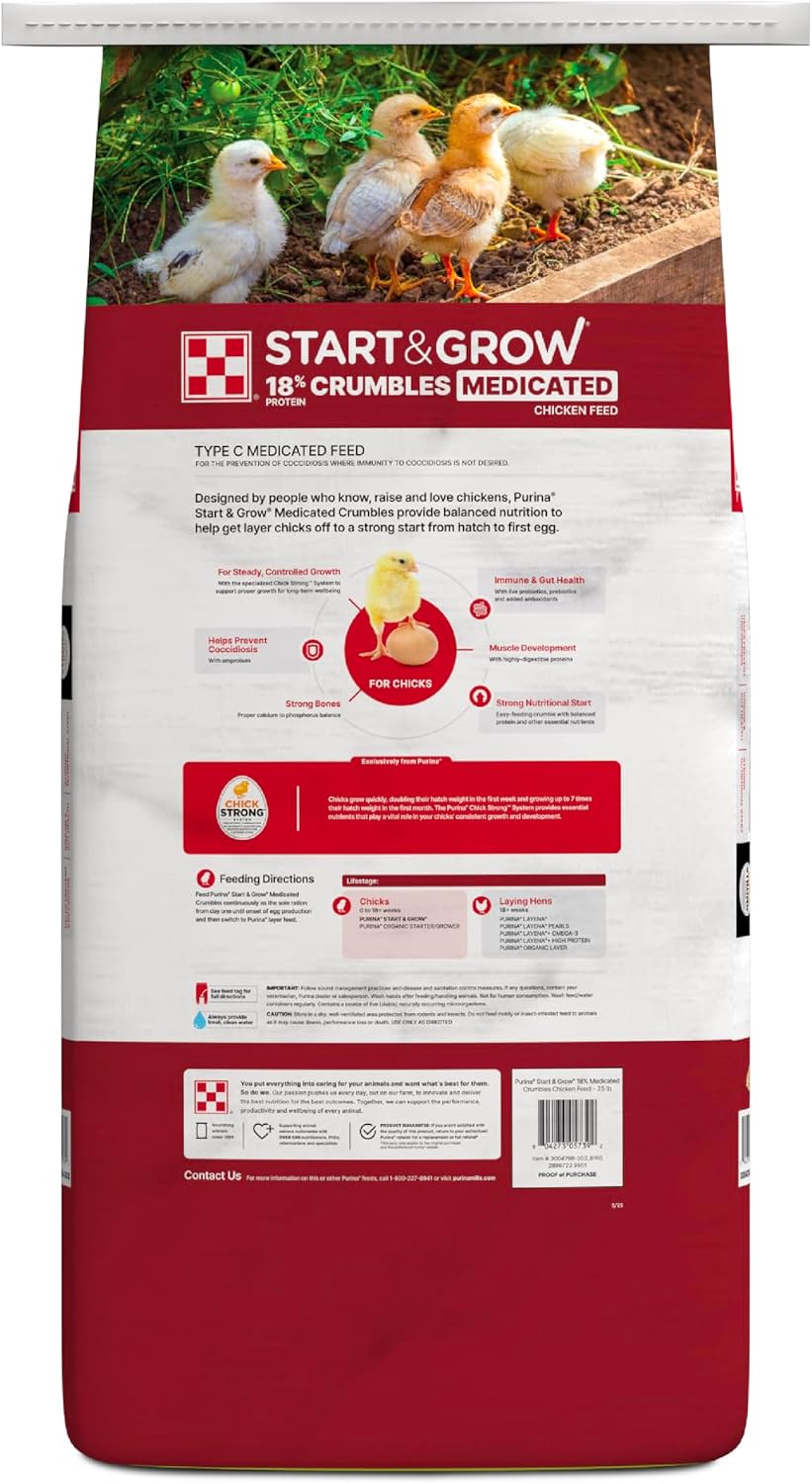
Purina Medicated Chick Starter
A widely available national brand with an 18% crude protein guarantee and amprolium at 0.0125%. Found at most farm-supply chains. Strong baseline choice for conventional backyard flocks.
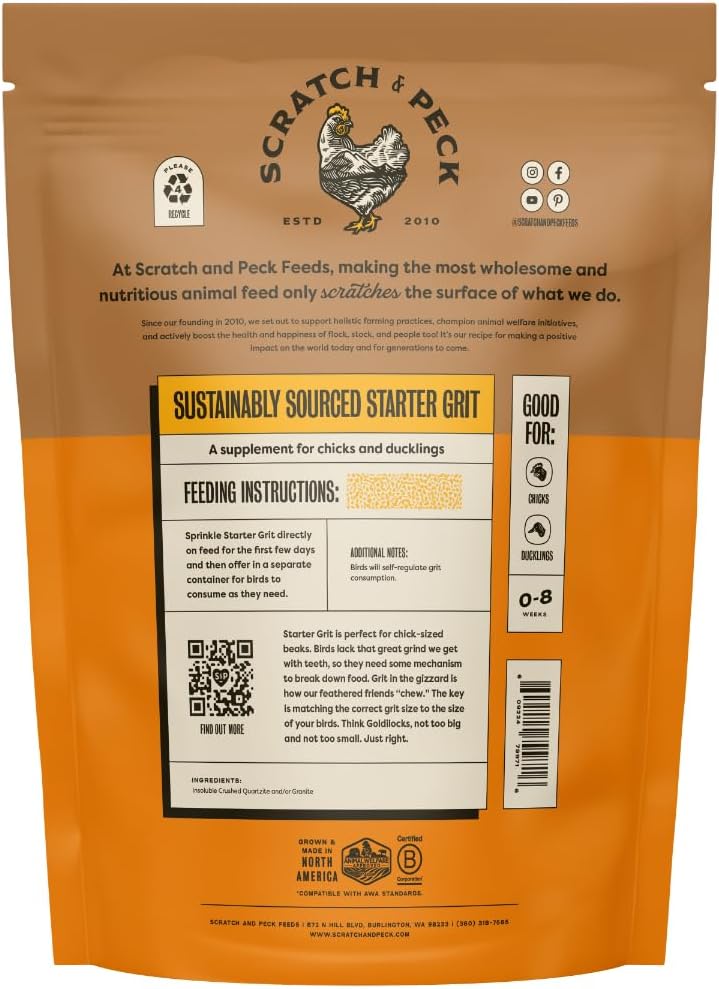
Scratch
$18.99
In stock on Amazon
Check price on AmazonDuMOR / Kalmbach Medicated Chick Starter
Regional brands carried at Tractor Supply and independent farm stores respectively. Both deliver 18% crude protein and the same 0.0125% amprolium level as the national brands. Kalmbach includes a published amino acid guarantee on some of its label runs. Pricing typically runs $1–$3 less per 50 lb bag than national equivalents.
Purina
$36.79
In stock on Amazon
Check price on AmazonNutrena NatureWise Chick Starter Medicated
An 18% protein, 3.5% fat formula with amprolium at 0.0125%. NatureWise positions itself above pure commodity with added prebiotics and slightly elevated energy density. At roughly the same price point as Purina, it is the option to reach for if you want a modest nutritional step-up without leaving the conventional medicated segment.
Purina
$36.79
In stock on Amazon
Check price on AmazonThe amprolium concentration is essentially industry-standard across the medicated segment. Where these feeds diverge is in their amino acid profiles, probiotic additions, and ingredient sourcing — details worth comparing if you’re choosing between them, but not the deciding variable in the medicated/non-medicated question itself.
The Vaccination Variable: The Biggest Decision Driver Most Guides Skip
Here’s the tradeoff that trips up even experienced keepers: if your chicks have been vaccinated against coccidiosis using a live oocyst vaccine (such as the Coccivac product line), feeding medicated starter actively undermines that vaccine.
Coccidiosis vaccines work by delivering live, attenuated Eimeria oocysts. The chick is exposed to a controlled dose, builds immunity, and is protected going forward. Amprolium in medicated feed suppresses the replication of those vaccine oocysts — which is exactly what the vaccine needs to do its job. The Poultry Site, in its overview “Coccidiosis Control in Broilers and Pullets,” notes that this interference is significant enough that hatcheries and integrators using anticoccidial vaccines explicitly specify non-medicated starter in their management protocols. This is not a fringe concern — it is standard protocol in commercial pullet production.
The practical decision tree:
- Chicks vaccinated for coccidiosis at the hatchery → use non-medicated starter. No exceptions.
- Chicks not vaccinated, entering a clean brooder with no prior flock history → medicated starter is a reasonable choice if coccidiosis pressure exists in your region or biosecurity is imperfect.
- Chicks not vaccinated, entering a brooder that has housed birds before → medicated starter is strongly advisable unless you have confirmed the space is sanitized and are managing litter carefully.
- Certified-organic operation, any vaccination status → non-medicated starter only. Amprolium disqualifies feed from USDA National Organic Program certification, as documented in the ATTRA National Sustainable Agriculture Information Service publication “Organic Poultry Production in the United States.”
When you order chicks from a hatchery, the vaccination record should come with your receipt or shipping confirmation. If it doesn’t, call and ask specifically about coccidiosis vaccination — not just Marek’s. Many keepers assume “vaccinated” means all vaccines; the two programs are entirely separate.
Non-Medicated Starter: What You’re Actually Choosing
Skipping amprolium isn’t the same as skipping protection. Non-medicated starters range from conventional commodity feeds to small-batch certified-organic formulations with meaningfully different nutritional profiles. The price spread reflects that range.
Non-medicated starter comparison — budget to premium:
Kalmbach Non-Medicated Chick Starter
A conventional non-medicated option carried at regional farm stores, typically priced in the $20–$24 range per 50 lb bag. Meets NRC nutrient minimums for layer and broiler chicks. The right call for unvaccinated birds in a certified-organic program where you still need a budget-conscious option, or for vaccinated chicks from any operation.
Scratch
$18.99
In stock on Amazon
Check price on AmazonScratch and Peck Feeds Organic Chick Starter
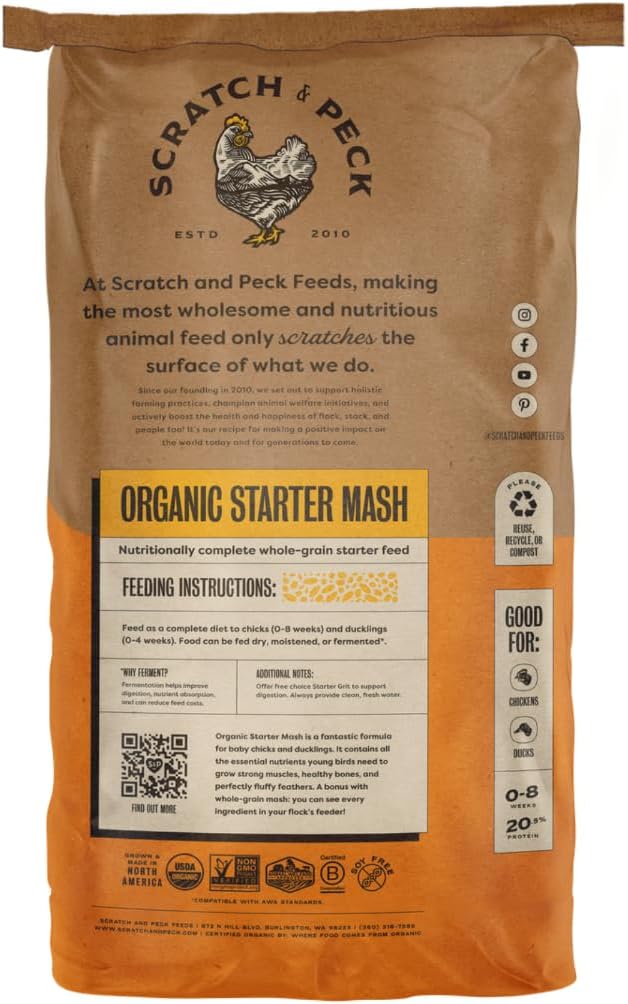
A small-batch, certified-organic, non-GMO crumble running roughly $32–$38 per 25 lb bag through specialty retailers and direct channels. Scratch and Peck publishes a lysine minimum of 1.0% and a methionine minimum of 0.40% on its guaranteed analysis — a level of amino acid transparency that commodity starters typically don’t provide on-label. For operations selling eggs or broilers at a premium and needing ingredient chain documentation, that transparency is a business asset.
Purina
$36.79
In stock on Amazon
Check price on AmazonModesto Milling Organic Chick Starter
A California-based certified-organic formula, direct-shipped or available through specialty feed retailers, running approximately $42–$48 per 25 lb bag. At roughly $1.70–$1.92 per pound versus $0.40–$0.52 per pound for conventional, you’re paying a 3–4x premium. What you’re buying: certified-organic ingredient sourcing, non-GMO verification, and the audit trail required for USDA organic certification of your finished product. Per Penn State Extension’s feeding guidance (“Feeding Chickens”), all commercial starters are formulated to meet NRC nutrient requirements — the premium here is certification and sourcing, not a dramatically different nutritional floor.
Scratch
$71.99
In stock on Amazon
Check price on AmazonManaging Coccidiosis Risk Without Amprolium
If you’re running non-medicated starter by choice or certification requirement, coccidiosis management shifts to husbandry:
- Litter management is primary. Eimeria oocysts require moisture and warmth to sporulate into their infectious form. Dry, well-ventilated litter dramatically reduces transmission pressure. The USDA National Agricultural Library’s poultry nutrition and feeding resources consistently identify litter quality as a foundational biosecurity lever — not a secondary one.
- Controlled exposure has a role. Chicks raised on wire with zero soil contact may reach pullet age with no natural immunity, then crash when introduced to a pasture environment. Some operators intentionally introduce small amounts of soil from an established, healthy flock area in the first two weeks — essentially a managed inoculation. This is a management judgment call, not a universal recommendation, and it introduces its own biosecurity variables.
- “Natural coccidiostats” deserve skepticism. Oregano oil and similar ingredients appear in some premium non-medicated formulas. The peer-reviewed evidence base for oregano oil as a meaningful coccidiostat at commercial inclusion rates remains thin as of 2026. Don’t let that marketing language substitute for real litter management or a genuine vaccination program.
Protein, Duration, and the Transition Decision
Both medicated and non-medicated starters typically run 18–20% crude protein — higher than layer feed (16%) because young chicks are building muscle, feathers, and organ tissue rapidly. The question keepers most frequently get wrong is how long to stay on starter.
The general guideline from Penn State Extension (“Feeding Chickens”) and most feed manufacturer protocols: starter through 8 weeks, then transition to a grower (16–18% protein, no added calcium) through 18–20 weeks, then layer feed once pullets begin laying. The mistake is rushing to layer feed. Layer pellets contain elevated calcium — typically 3.5–4% — for shell formation, a level that can damage the developing kidneys of chicks and pullets that aren’t yet laying. This applies equally to medicated and non-medicated programs.
If you’re running a mixed flock — meat birds and layer pullets together — the protein and calcium calculus gets more complicated. Broiler chicks need higher protein (22%+ for the first several weeks) and have a much shorter growth window than pullets. For that scenario, a dedicated broiler starter separate from a layer-pullet starter is the cleaner solution, even if it means managing two feeders in the same brooder space.
The Clear Decision Rule
If you’ve read this far, you have enough context to make the call cleanly. Here’s the framework, distilled:
If your chicks were vaccinated for coccidiosis → non-medicated starter, full stop. Medicated feed will work against the vaccine. The interference is well-documented in both commercial poultry management literature and the Merck Veterinary Manual (“Coccidiosis in Poultry”). Don’t complicate it.
If your chicks are unvaccinated and you’re running a conventional operation with any history of prior birds in the brooder space → medicated starter is the lower-risk choice for the first 4–6 weeks, especially in regions with warm, wet spring conditions that favor Eimeria cycling. The marginal cost difference between medicated and non-medicated conventional starters is typically under $2 per bag — not a meaningful financial argument either way.
If you’re pursuing organic certification → non-medicated is your only path, as confirmed by the ATTRA publication “Organic Poultry Production in the United States.” Your management system needs to compensate with rigorous litter protocols and, ideally, vaccination at the hatchery level — a point the USDA National Agricultural Library’s poultry resources echo in their biosecurity guidance.
If you’re sourcing premium non-medicated feed for a certified-organic or non-GMO operation — Modesto Milling, Scratch and Peck, or similar — the per-bag cost is real, but the ingredient transparency and certification documentation are what you’re actually paying for. For operations selling eggs or broilers at a price premium, that documentation chain is an income-generating asset, not merely an ethical preference.
The medicated vs. non-medicated question is ultimately simpler than the label language makes it seem. Know your chicks’ vaccination status, know your brooder’s history, and know your certification requirements. Everything else — protein percentages, ingredient sourcing, amino acid profiles — is the layer of decision-making that comes after you’ve got the foundational choice right.